Some weeks you sleep like a stone. Other weeks you are awake at 2am, too warm, aching low in your back, and wondering why nothing has changed except the date. If that pattern repeats month after month, it is not your imagination and it is not bad luck.
Sleep and your period are tied together far more tightly than most of us are ever told. Body temperature, progesterone, iron levels and pain all move across the cycle, and each one has a say in how well you rest. Here is what actually changes, and what helps at the point in the month when you need it most.

How sleep and your period are connected
The short answer. Across a typical cycle, two hormones do most of the talking. Oestrogen rises in the first half, progesterone dominates the second, and both drop away sharply just before bleeding starts. Your sleep follows that curve whether you notice it or not.
Progesterone warms you up
Your core temperature rises after ovulation. In the luteal phase, roughly the two weeks before your period, body temperature sits around 0.3 to 0.5C higher. Falling asleep depends on your core temperature dropping, so a warmer baseline makes the whole process slower and lighter. It is the same reason a hot bedroom is such a problem, as our guide to sleeping in hot weather explains.
The pre-period hormone drop unsettles everything
Three or four days of choppy nights is typical. As progesterone and oestrogen fall away, many people notice more waking, more vivid dreaming and a lower mood. Progesterone has a mildly calming effect on the brain, so losing it quickly feels like losing a sedative you did not know you were taking.
Pain and blood loss do the rest
Cramps wake you, and low iron keeps you tired. Period pain fragments sleep in the first day or two, and heavier bleeding over months can pull iron down, which is linked to restless legs at night as well as daytime exhaustion that no amount of sleep seems to fix.
What each phase tends to feel like
Days 1 to 5, your period
Pain in, sleep out. The first two nights are usually the most broken. Cramping, back ache and getting up to change protection all chop the night into pieces. Warmth on the abdomen, ibuprofen taken before bed rather than at 3am, and a comfortable side-lying position help more than most things.
Days 6 to 14, the follicular phase
The good fortnight. Oestrogen climbs, temperature is at its lowest, and sleep is usually deepest and easiest here. It is a sensible window to bank good habits, exercise harder and reset your body clock if it has drifted.
Days 15 to 28, the luteal phase
Warmer, lighter, more fragmented. This is where most people notice the difference: taking longer to drop off, waking more, feeling less refreshed. Add PMS symptoms, appetite changes and low mood, and it can look a lot like insomnia when it is really a hormonal pattern.
What actually helps
Run the bedroom colder in the second half
Adjust the room, not your expectations. If your temperature is up, drop the room a degree or two, switch to breathable bedding and get your feet out from under the duvet. Small changes to the environment do the heavy lifting here, and our guide to the ideal bedroom setup covers the rest.
Take pressure off the lower back and hips
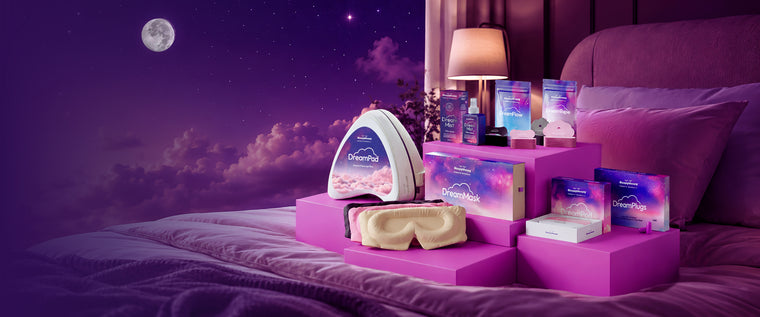
Comfort is a sleep intervention, not a luxury. Cramps and back ache are worse when your pelvis is twisted. Sleeping on your side with a cushion between the knees keeps the hips stacked and the lower spine neutral, which is exactly the fix we recommend for sleeping with lower back pain. A supportive sleep posture setup makes a real difference on the nights when lying still is the hard part, and our guide to the best knee pillows in the UK explains what to look for. A memory foam option like the DreamPad knee pillow is the simplest version of it.
Keep your wake time steady
Do not chase the lost hours. A long lie-in after a broken night pushes your body clock later and makes the next night worse. Get up at your usual time, get daylight early, and let the pressure to sleep rebuild naturally.
Watch caffeine and alcohol in the luteal week
Your tolerance is not constant. Both hit harder when sleep is already light, and alcohol in particular fragments the second half of the night. Our piece on how caffeine and alcohol quietly ruin your sleep goes into the detail.
Eat for steadier nights
Iron, magnesium and a proper evening meal. Heavier periods raise the chance of low iron, so it is worth asking your GP for a ferritin test if you are permanently exhausted. Beyond that, what you eat and avoid before bed matters more in the week when sleep is already fragile.
When it is worth seeing a doctor
Some things are common but not normal. Period pain that regularly wakes you, bleeding heavy enough to soak through overnight, exhaustion that never lifts, or premenstrual mood changes severe enough to disrupt your life are all worth a GP appointment. Very disrupted sleep in your forties may also be the early edge of perimenopause, which we cover in menopause and sleep. And if pregnancy is on the cards, sleep during pregnancy picks up where this leaves off.
Frequently asked questions
Why do I sleep so badly the week before my period?
Higher core body temperature and falling progesterone are the main culprits. Both make it harder to fall asleep and easier to wake, so the week before bleeding is genuinely the hardest part of the cycle for most people.
Is it normal to feel exhausted on my period?
Tiredness in the first day or two is very common, driven by disrupted sleep, pain and hormone withdrawal. Exhaustion that lasts all month, or that leaves you breathless on stairs, is worth checking for low iron.
Does the pill change how I sleep?
It can, in both directions. Hormonal contraception flattens the natural cycle, which some people find steadies their sleep and others find makes it slightly worse. Give any new method a few months before judging it.
Should I nap when my period wrecks my night?
A short nap of twenty minutes before mid-afternoon is fine and will not damage the following night. Longer or later naps will. There is more on getting the timing right in our guide to napping the right way.
Can tracking my cycle help my sleep?
Yes, mostly by removing the worry. Once you can see that your worst nights land in the same few days each month, you stop treating them as a sign of developing insomnia and start planning around them instead.

The bottom line
Your sleep is not the same every night of the month, and expecting it to be sets you up to feel like you are failing. Temperature rises after ovulation, hormones drop before bleeding, and pain does the rest. Plan for it: cooler room and softer expectations in the second half, comfort and pain relief in the first two days, steady wake times throughout, and a proper conversation with your GP if the pain or the tiredness is running your life. The good fortnight is a real thing too, and it is worth making the most of.
Try DreamPad - a memory foam knee pillow that keeps your hips aligned and takes the strain off a sore lower back.
Better nights start here. SleepyDeepy.