


Shop the range
Mouth Tape
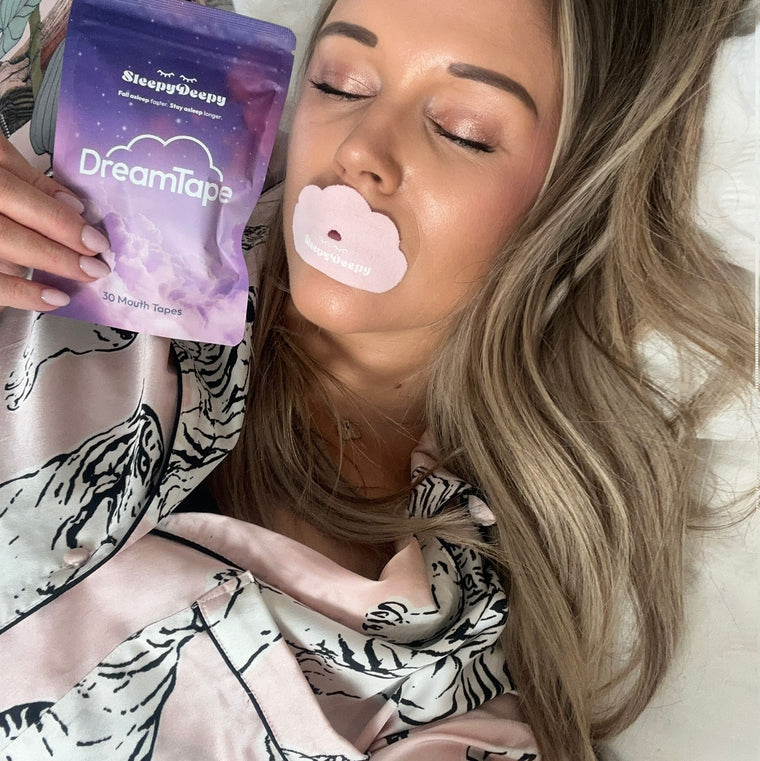
Vented, skin-safe tape that keeps your mouth closed so you breathe through your nose - for quieter, less snory, drier-mouth-free nights. Meet DreamTape.
-
-
DreamTape Mouth Tape - Dreamy Pink
Regular price
£12.99Sale price £9.99“Love this product. Can’t sleep comfortably without it.”
View Product
-
DreamTape Mouth Tape - Midnight Black
Regular price
£12.99Sale price £9.99“Stays on all night and feels comfortable.”
View Product
-
-
-
-
-


Filters
Vented airflow
A breathing hole so you are never fully sealed
Skin-safe
Gentle, hypoallergenic, peels off cleanly
Quieter nights
Less snoring and dry mouth
What makes a good mouth tape
Mouth tape all does the same basic job - it keeps your lips gently closed so you breathe through your nose instead of your mouth. But the gap between a tape you stick with and one you rip off at 2am comes down to three things.
First, the adhesive: it needs to hold all night yet peel off in the morning without tugging or leaving residue, which is why a soft, hypoallergenic, medical-grade adhesive matters - especially for sensitive skin or facial hair. Second, a vent: a small breathing hole means you are never fully sealed, which makes tape far less daunting for first-timers. Third, the right size and shape, so it stays put without covering more of your face than it needs to.
DreamTape is built to do all three - vented, skin-safe and drug-free. For a full comparison of what is on the market, read our guide to the best mouth tape in the UK.
Your questions, answered
For most healthy adults, yes - a vented, skin-safe tape used correctly is low-risk. The key points: use a gentle adhesive, never tape a child, and stop if you feel breathless. If you have a blocked nose, sleep apnoea, or any heart or breathing condition, check with your GP first.
Avoid it if you cannot breathe comfortably through your nose (a heavy cold or chronic congestion), if you have untreated sleep apnoea, or if you have been drinking or taking sedatives. Children should not use it. When in doubt, ask your doctor.
They solve different halves of the same problem. Mouth tape keeps your mouth closed; nasal strips open your nose. If your nose is clear but your mouth falls open, tape is enough. If your nose is narrow or stuffy, a strip helps - and many people use both together for the easiest nose breathing.
It reduces the snoring caused by mouth breathing, which is a very common cause. It will not fix snoring that comes from the throat or from sleep apnoea. For a lot of people, though, simply keeping the mouth shut is enough to go from loud to quiet.
Keep exploring
Compare the options in our guide to the best mouth tape in the UK. Also worth a look: nasal strips and everything for snoring.


