Shop by sleep problem
Deeper Sleep
Products that protect your sleep quality once you get there - blocking out the light, noise, and physical discomfort that pulls you out of deep sleep.
-
-
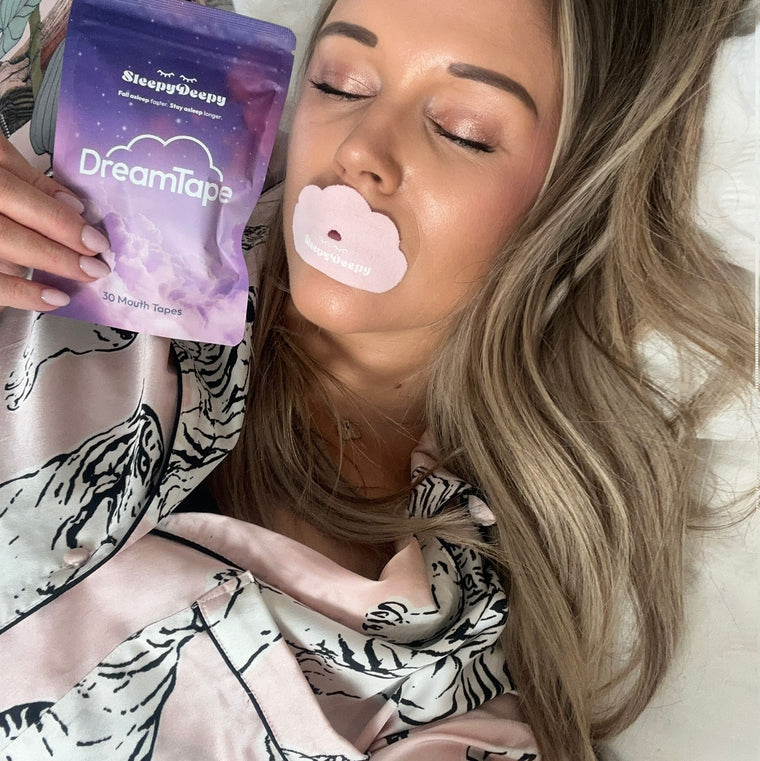
DreamTape Mouth Tape - Dreamy Pink
Regular price
£12.99Sale price £9.99“Love this product. Can’t sleep comfortably without it.”
View Product
-
DreamTape Mouth Tape - Midnight Black
Regular price
£12.99Sale price £9.99“Stays on all night and feels comfortable.”
View Product
-
DreamFlow Nasal Strips - Midnight Black
Regular price
£12.99Sale price £9.99“Has literally stopped my snoring!”
View Product
-
DreamPod Pillow Speaker - Moonlit Grey
Regular price
£38.99Sale price £28.99“We enjoy listening peacefully before going off to sleep.”
View Product
-
DreamPad Knee Pillow
Regular price
£19.99Sale price £17.99“Helped me sleep and reduced my back and knee pain.”
View Product
-
DreamPod Pillow Speaker - Dreamy Pink
Regular price
£38.99Sale price £28.99“My wife loves hers. A fantastic product.”
View Product
-
DreamFlow Nasal Strips - Dreamy Pink
Regular price
£12.99Sale price £9.99“I can breathe clearly - makes such a difference at night.”
View Product
-
DreamMask Blackout Sleep Mask - Black
Regular price
£28.99Sale price £24.99“Literally like being in a cave. Complete blackout.”
View Product
-


DreamPlugs Earplugs for Sleeping
£9.99
“Excellent ear plugs, really keep the noise out.”
View Product
-
DreamMask Blackout Sleep Mask - Teal
Regular price
£28.99Sale price £24.99“Blacks out the daylight so I can nap to my heart’s content.”
View Product
-
DreamMist Lavender Pillow Spray
Regular price
£12.99Sale price £9.99“The smell makes me feel relaxed, really soothing.”
View Product
-
DreamMask Blackout Sleep Mask - Grey
Regular price
£28.99Sale price £24.99“Provides true blackout conditions.”
View Product
-
DreamMask Blackout Sleep Mask - Champagne
Regular price
£28.99Sale price £24.99“Excellent quality and very comfortable.”
View Product
-
-
DreamMask Sleep Mask - Lavender
Regular price
£28.99Sale price £24.99“Great to help me sleep. I love it.”
View Product
-
DreamMask Sleep Mask - Pink
Regular price
£28.99Sale price £24.99“Sits nicely on my face and feels smooth and cool.”
View Product
-
DreamMask Sleep Mask - White
Regular price
£28.99Sale price £19.99“Very comfortable and calming.”
View Product


Filters
What Deep Sleep Actually Is - and Why It Keeps Getting Interrupted
Sleep is not a single uniform state. It cycles through distinct stages throughout the night, each serving different biological functions - and the stage most people are not getting enough of is slow-wave sleep, also called deep sleep or N3.
Deep sleep is characterised by slow, high-amplitude brain waves, minimal conscious awareness, and significant physiological repair: growth hormone release, cellular repair, immune consolidation, and memory consolidation all occur predominantly in N3. Most deep sleep is concentrated in the first half of the night, making the early hours disproportionately important.
The problem is that deep sleep is fragile. The brain does not need to fully wake to be pulled out of N3 - a partial arousal resets the sleep cycle. These microarousals are often caused by:
Light - even low-level light through closed eyelids activates retinal pathways that signal wakefulness. A properly fitted blackout mask eliminates this entirely, including early morning light that progressively fragments sleep as the night goes on.
Noise - environmental noise causes measurable microarousals even in people who report sleeping through it. A snoring partner is one of the most common causes of fragmented deep sleep in adults who do not themselves snore. High-attenuation earplugs are the simplest intervention.
Physical discomfort - hip and back pain from misaligned sleeping position is particularly common in side sleepers and responds well to correct knee pillow support. Pain does not need to be severe to disrupt sleep stages - low-level discomfort is enough to prevent full descent into deep sleep.
Mouth breathing - breathing through the mouth during sleep reduces nitric oxide production, increases airway resistance, and is associated with reduced oxygen saturation - all of which affect sleep architecture. Correcting to nasal breathing improves the depth and continuity of sleep cycles.
You do not need to sleep longer to sleep better. You need fewer interruptions to what is already happening.