Few things make a night feel longer than a sore lower back. You find a position that feels bearable, drift off for an hour, then wake up stiff and shuffling for a new one. By morning you are tired and aching, which is the opposite of what a night in bed is meant to do. If that sounds familiar, learning how to sleep with lower back pain can change your nights more than any new mattress promise.
The good news is that most of what helps is simple, free and within your control: how you lie, what you tuck a pillow under, and a few small habits before bed. This guide walks through the positions that tend to ease a sore back, the ones to approach with care, and the gentle changes that help you stay asleep once you finally settle. None of it replaces a doctor or physiotherapist for ongoing pain, but it is a sensible place to start tonight.

Why your lower back hurts more at night
During the day you keep moving, which keeps the muscles around your spine warm and loose. Lie still for hours and those tissues can stiffen, while a poorly supported position quietly strains the joints and discs of your lower back. Add a too-soft or sagging mattress and the spine loses its natural alignment, so you wake sore even though you did nothing but sleep.
Alignment is the whole game
The single most useful idea when working out how to sleep with lower back pain is spinal alignment. You want your ears, shoulders and hips to sit in a comfortable, neutral line, with no part of your back twisting or sagging. Get that roughly right and the muscles can finally switch off. Most position fixes below are really just clever ways to hold that neutral line while you rest.
The best positions for a sore lower back
On your side, with a pillow between your knees
Side sleeping is a firm favourite for back pain, and a pillow between the knees is the trick that makes it work. Without it, the top leg drops forward and rotates the pelvis, tugging on the lower back. A supportive knee pillow keeps your hips stacked and your spine level all night. This is exactly what our DreamPad knee pillow is shaped to do, and if you sleep on your side it is one of the easiest wins there is.
On your back, with support under the knees
Lying on your back spreads your weight evenly, but a flat position can flatten the natural curve of your spine. Slip a pillow or a rolled towel under your knees and that curve is restored, taking the strain off the lower back. It is a small change that many people find instantly more comfortable.
The foetal position for disc-related pain
If your pain comes from a disc issue, curling gently onto your side with your knees drawn up can open a little space between the vertebrae and ease the ache. Keep the curl loose and relaxed rather than tightly clenched.
Approach front sleeping with care
Sleeping on your stomach tends to flatten the spine and forces your neck to one side, so it is usually the least back-friendly option. If you truly cannot sleep any other way, slide a thin pillow under your hips and lower tummy to reduce the strain. For a fuller look at the trade-offs, our guide to the best sleeping position goes into more detail.
Small habits that make a big difference
Your position matters most, but the little things around it help too. A few tweaks to your setup and evening can turn a bearable night into a genuinely restful one.
Get your mattress and pillows working for you
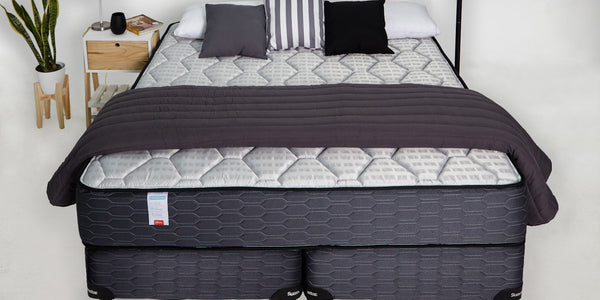
A mattress that sags in the middle will undo even the best sleeping position, so if yours is old and dipping it may be part of the problem. Beyond the mattress, the right supporting pillows are what hold your alignment in place - you can see the full range in our sleep posture collection, and our guide to the best knee pillow explains what to look for. A tidy, calm room helps as well, as we cover in the ideal bedroom setup for better sleep.
Move gently before bed, and when you wake
A few minutes of easy stretching or a short walk in the evening keeps the muscles around your spine from seizing up overnight. When you wake, roll onto your side and push up with your arms rather than jack-knifing straight up, which spares your back the worst of the morning strain.
Keep your wider sleep on track
Pain and poor sleep feed each other, so protecting your overall rest pays off. A steady bedtime and wind-down, like the one in our bedtime routine guide, helps you fall asleep before the aching has a chance to take over. If back pain is a new companion of pregnancy, our piece on sleep during pregnancy has extra pointers for those months.
Frequently asked questions
What is the best sleeping position for lower back pain?
For most people it is side sleeping with a pillow between the knees, or back sleeping with a pillow under the knees. Both keep the spine in a neutral line. The very best position is the comfortable one you can hold without twisting or sagging.
Should I sleep on a firm or soft mattress?
Medium-firm suits most people with back pain. Too soft and you sink out of alignment; too hard and it presses on your hips and shoulders. If your current mattress sags in the middle, that alone can be enough to keep a back sore.
Is it bad to sleep on my stomach with back pain?
It is usually the least helpful position, because it flattens the spine and twists the neck. If you cannot sleep any other way, a thin pillow under your hips reduces the strain, but it is worth gently training yourself towards side or back sleeping.
Why is my lower back pain worse in the morning?
Hours of stillness let the muscles stiffen, and a position that pulls you out of alignment adds to it overnight. Better support and a gentle way of getting out of bed usually help. Morning pain that is severe or long-lasting is worth raising with a professional.
When should I see a doctor about night-time back pain?
See someone if the pain is severe, wakes you regularly, spreads down a leg, or comes with numbness, tingling or any loss of bladder or bowel control. Those are signs to get proper advice rather than manage it alone.
The bottom line
Learning how to sleep with lower back pain is mostly about protecting your spine's natural alignment: sleep on your side with a pillow between your knees or on your back with support beneath them, give front sleeping a wide berth, and make sure your mattress and pillows are actually holding you up. Add a little gentle movement and a steady routine, and most people find their nights get easier fairly quickly.

Try the DreamPad Knee Pillow - shaped to sit between your knees, keep your hips stacked and take the nightly strain off your lower back.
Rest easy. Wake easier. SleepyDeepy.