
If you've ever scrolled through the comments on a mouth tape advert, you've seen this one:
"This is so irresponsible. Millions of people have undiagnosed sleep apnea and this is a dangerous product."
We see it on our own ads. Often. And here's the thing: that comment isn't entirely wrong.
Millions of people genuinely do have undiagnosed sleep apnoea. It's a condition that needs proper medical attention, not a strip of tape. And if you're one of those people, mouth taping is not the right tool for you.
But the comment is also missing some important context. Like the fact that there are no documented deaths from mouth taping in healthy adults. Or that good mouth tape is designed with safety vents specifically because the brands behind it have thought hard about exactly this concern. Or that for everyone without sleep apnoea, nasal-breathing during sleep is one of the most studied and beneficial habits you can build.
So this article is the most honest thing we can write on the topic. We'll lay out who should never tape, why the sleep apnoea concern is valid, what the actual evidence says, and how to think about this for yourself. No spin. No fear-mongering. Just the truth as we understand it.

What Sleep Apnoea Actually Is
The short answer. Sleep apnoea — most commonly obstructive sleep apnoea, or OSA — is a condition where the upper airway repeatedly collapses or narrows during sleep. The result is dozens, sometimes hundreds, of brief breathing pauses every night. Each pause forces the body to partially wake itself up to restart breathing, which fragments sleep and starves the brain and body of oxygen for short periods.
The classic signs include very loud snoring, witnessed pauses in breathing followed by gasping or choking, daytime exhaustion that doesn't lift no matter how long you sleep, morning headaches, and waking up with a dry, raw throat. Untreated, OSA is a serious cardiovascular risk factor — linked to high blood pressure, stroke, and atrial fibrillation. The proper treatment is medical: a sleep study, then options like CPAP, mandibular advancement devices, or in some cases surgery.
This is not a condition you treat with a strip of tape. We need to say that loudly and clearly because some of the criticism is rooted in a worry that brands like ours are encouraging people to self-treat a real medical condition. We're not. We don't want sleep apnoea sufferers using DreamTape instead of seeing a doctor. We want them seeing a doctor. Period.
How Many People Are Walking Around With Undiagnosed Sleep Apnoea?
This is where the critical commenter has a real point. The numbers are uncomfortable.
Estimates from the NHS and major sleep medicine bodies suggest that roughly one in five adults has at least mild OSA, and most of them — somewhere between 75% and 90%, depending on the study — have not been diagnosed. The condition is more common in men, in people over 40, in those who carry weight around the neck and abdomen, in heavy snorers, and in heavy drinkers, but it can affect anyone, including slim women in their twenties.
The reason it goes undiagnosed is depressingly simple. The person who snores doesn't hear themselves. The person who pauses breathing isn't conscious of it. The exhaustion gets blamed on a stressful job, a new baby, "getting older," or just modern life. Many sufferers go decades before something — often a partner's frustration, a routine GP visit, or a near-miss while driving — finally pushes them toward a sleep study.
So when the internet says, "millions of people have this condition without knowing," it's not exaggerating. It's a real, large, under-diagnosed problem.
The question we want to answer is: does mouth taping make that problem worse? Or does it just make some people — including a few people who already had sleep apnoea — more aware of how poorly they were sleeping?
Has Anyone Actually Died From Mouth Taping?
We've looked. Properly. Searched medical literature, news archives, coroners' reports, and forums. We can't find a single documented case of a healthy adult dying from sleep mouth taping with a product designed for that purpose.
That doesn't mean it has never happened or could never happen — absence of reports is not absence of evidence. It does mean the doomsday framing some critics use ("you're going to suffocate someone") is not currently supported by any record we can find. The body has multiple fallback mechanisms when breathing is restricted: the urge to breathe is one of the most powerful reflexes in human physiology, and a small piece of tape across the lips will not override it. Most people who try mouth taping and don't get on with it report that they wake up, peel the tape off, and that's the end of the experiment.
What has been reported in the medical literature is that mouth taping isn't appropriate for people with significant sleep-disordered breathing. That's not the same as "mouth tape is dangerous" — it's "mouth tape isn't a treatment for sleep apnoea, and if you have sleep apnoea, doing things that change airway dynamics without supervision is unwise."
That's an important distinction. Critics conflate the two. We don't want to.
Who Should Never Tape Their Mouth
This is the part of the article we'd rather you read twice. If any of the following apply to you, do not start mouth taping. Not with our tape. Not with anyone's. Talk to a GP or sleep specialist first.
- You snore loudly enough that your partner has had to move rooms, or that you can be heard from the next room. Loud, frequent snoring is the single most common warning sign of OSA.
- You wake up gasping or choking, or your partner has watched you stop breathing during sleep. This is OSA until proven otherwise. See a doctor.
- You wake up with a thumping heart or panicked feeling for no reason. Often nocturnal apnoea events.
- You have severe nasal obstruction that doesn't clear with sitting up, a hot shower, or normal decongestants. If you genuinely cannot breathe through your nose, you cannot use mouth tape.
- You're heavily congested with a cold, allergies, or sinus infection. Pause taping until you're clear.
- You've drunk a significant amount of alcohol. Alcohol relaxes airway muscles and worsens any underlying sleep-disordered breathing. Skip the tape that night.
- You have heart, lung, or neuromuscular conditions, or you've had recent surgery. Speak to your clinician first.
- You're pregnant. Nasal anatomy and breathing patterns change in pregnancy. Get personalised advice.
- You're under 18. Mouth taping is not for children or adolescents.
If any of those apply, the responsible thing — the thing we'd ask of you on behalf of your partner, your kids, and the next thirty years of your life — is to get a proper assessment. The NHS has a clear pathway for sleep apnoea starting with your GP, who can refer you for an at-home sleep study. Private overnight oximetry tests are also widely available and not expensive.
Sleep apnoea is fully treatable. The hard part is the diagnosis, not the fix.
What to Do If You Suspect You Have Sleep Apnoea
The screening process is simpler than people expect. The standard first step is a questionnaire — usually the STOP-BANG or Epworth Sleepiness Scale — that your GP can run through in five minutes. If your score raises a flag, you'll be referred for an at-home sleep test, where a small device records your breathing, oxygen, and pulse overnight.
If the test confirms OSA, treatment options include CPAP machines (the gold standard for moderate-to-severe cases), mandibular advancement devices for milder cases, weight loss when relevant, and positional therapy for people who only have apnoea when sleeping on their back. Many people who finally get diagnosed describe the first night with effective treatment as transformational. Years of fatigue, brain fog, and low mood lift in a way that diet, supplements, and sleep hygiene never quite achieved.
If you've been reading this article and parts of it sound suspiciously like your own experience — the loud snoring, the daytime exhaustion, the not-rested feeling — please prioritise a GP visit over a packet of mouth tape. We'd rather lose a sale and have you healthier than the other way around.
For Everyone Else: Mouth Taping Is One of the Most Useful Habits We Know
Now, the other side of the picture.
For healthy adults without the warning signs above, gentle nasal breathing during sleep is associated with reduced snoring, better humidification of the airway, less morning dry mouth, fewer overnight wake-ups, more stable oxygen saturation, and — over time — better dental and oral health. Many people are habitual mouth breathers without realising it, simply because they grew up with allergies, congestion, or a slightly small nasal airway, and the habit stuck even when the underlying cause faded.
Encouraging the body back to its default — breathing through the nose — is what mouth taping is actually for. We've written about why nasal breathing matters during sleep and how chronic mouth breathing disrupts your sleep architecture in their own posts.
The mistake the most aggressive critics make is treating mouth taping as if it were a medical intervention. It isn't. It's a gentle behavioural cue — closer to wearing a posture corrector than to using a CPAP. For the vast majority of healthy adults, it's a low-risk, low-cost habit that takes a fortnight to feel and a few months to become permanent.
Smart Design Matters: Why Tape Is Not Tape
Here is where the conversation usually goes off the rails. People picture mouth taping as a strip of duct tape sealing the lips together like a horror film. That isn't, and never was, the assignment.
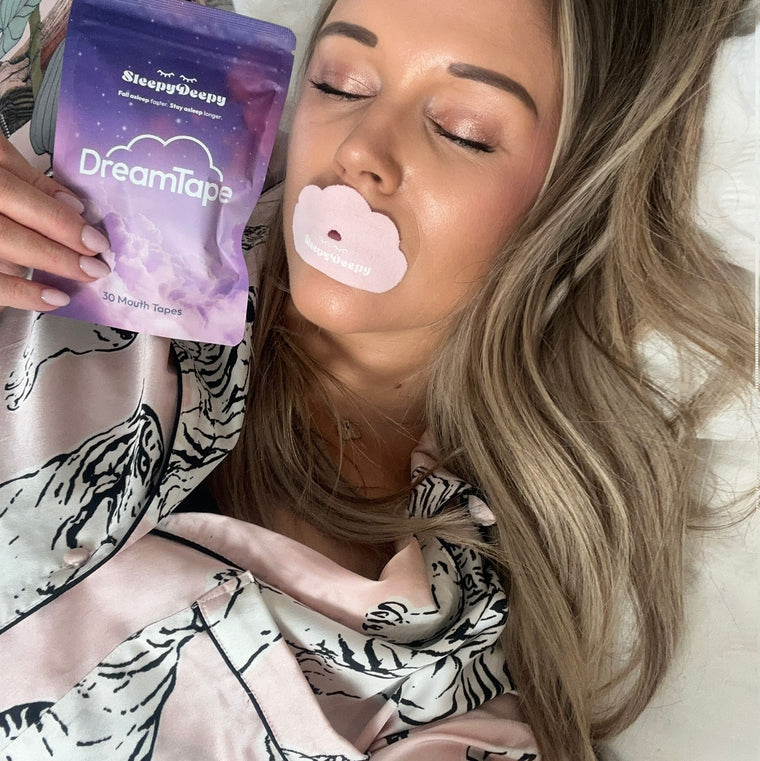
Modern mouth tape is hypoallergenic, gentle on skin, and — in any well-designed product — vented. Our DreamTape has a small breathable vent in the centre of the strip. It does two things: it lets a small amount of mouth-breathing happen if your nose is suddenly more blocked than expected (allergies kicking in mid-night, for instance), and it makes the tape easier to remove instinctively. It's not a clinical safety device, and we'd never market it as one. But it does make the experience more forgiving than the rectangular strips most people picture when they hear "mouth tape."
For some people, the issue isn't really habit — it's structural. Narrow nasal passages, deviated septum, polyps, persistent allergies. Those people often cannot get on with mouth tape no matter how good the design, because the bottleneck is upstream. That's why nasal strips exist. DreamFlow is a soft, external nasal strip that gently lifts the side walls of the nostrils to open the airway. It works for plenty of people on its own, and pairs neatly with mouth tape for people whose problem is partly habit and partly anatomy. The Mouth Tape Starter Kit bundles both, which is how a lot of customers prefer to start.
This is mentioned more as context than as a sales pitch. The point of this article is the honest answer to the sleep apnoea concern, not a product page.
What the Critics Get Right (and What They Miss)
The strongest version of the critical comment goes something like: "Many people don't know they have sleep apnoea. Selling them mouth tape risks making them think they've solved a problem they haven't, or worse, masking warning signs."
That's a fair point. We take it seriously. It's why we publish posts like the one you're reading, and why our in-depth safety guide on mouth taping is one of our most-read articles.
The weaker version of the comment — "this product will kill people" — is not borne out by evidence we can find, and it tends to lump well-designed, vented, hypoallergenic strips in with TikTok videos of people using packing tape across their entire mouth. Those are not the same product, and no responsible brand would suggest the second is acceptable.
The thing critics often miss is that mouth taping has, in some cases, been the reason people finally got diagnosed with sleep apnoea. Plenty of customers have written to tell us they tried tape, found themselves still snoring or waking gasping, did a bit of reading, booked a sleep study, and got the treatment they needed. The tape didn't cause their apnoea. It revealed it. Sometimes the tools we use to optimise sleep send useful signals about what's underneath.
Common Questions We Get
I snore, but I don't gasp or stop breathing — can I still try mouth tape?
Light, occasional snoring without other warning signs is generally not the same as sleep apnoea. Plenty of mouth tape users find their snoring reduces or disappears once they're consistently nasal-breathing. That said, if your partner has ever pointed out that your snoring is loud, frequent, or has worsened recently, take that as a nudge to get a quick screening before you start.
Should I get a sleep study before trying mouth tape?
If you have any warning signs from the list above, yes — get the sleep study first. If you don't, a sleep study is not a prerequisite for trying nasal-breathing aids, any more than it would be for using a humidifier or sleeping in a cooler room. Use your judgement and listen to anyone who shares a bedroom with you.
Can I use mouth tape if I'm already on CPAP?
Some CPAP users do use mouth tape (or chinstraps) alongside a nasal mask to prevent mouth-leak. This is a question for your sleep clinician, though, not for us. Don't change a CPAP setup without medical input.
What if I wake up and the tape is off?
That's normal, especially in the first few weeks. The body sometimes peels tape off subconsciously when it wants more airflow — which is exactly why a vented, gentle adhesive matters. Treat it as information, not failure. If it happens every night for a month, your nasal airway is probably the bottleneck — try a nasal strip alongside, or revisit whether mouth taping is right for you at all.

Final Thoughts: Honesty Wins
Mouth taping is not for everyone. We will keep saying that. If you snore loudly, wake gasping, or have any of the warning signs in the list above, please put the tape down, see a doctor, and get a sleep study. There's no version of our brand that wants you to do anything else.
For everyone else — the healthy adult who breathes through the mouth out of long-standing habit, who wakes with a dry throat, who suspects their snoring is more annoyance than danger — mouth taping is one of the most well-studied, low-cost, low-risk sleep upgrades available. With a vented design like our DreamTape, applied sensibly, it's something we and our customers genuinely use most nights.
The honest position isn't "mouth tape is dangerous" or "mouth tape is for everyone." It's somewhere quieter and more grown-up: mouth tape is for some people, not for others, and the line between them is reasonably easy to draw if you're paying attention.
If you've read this far and you're not in the warning-sign group, you can experiment with confidence. If you are, please look after yourself first.
Sleep well. Sleep properly. SleepyDeepy.
Mentioned in this article:
- DreamTape — Vented mouth tape to support nasal breathing
- DreamFlow — Nasal strips for structural blockage and snoring
- Mouth Tape Starter Kit — DreamTape and DreamFlow together
Further reading: