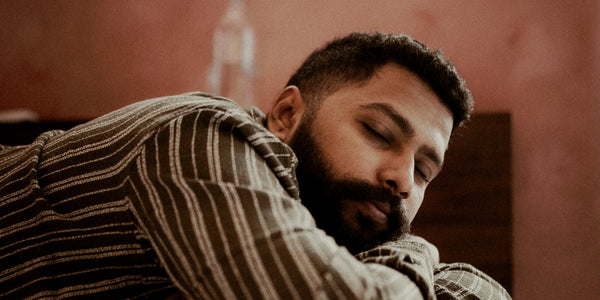

You spend a third of your life in one of three positions, and most people never give the choice a second thought. Yet the position you sleep in affects your breathing, your snoring, your back, your neck, and how refreshed you feel in the morning - sometimes more than the number of hours you log.
The good news is that the evidence here is fairly settled. There is a clear best position for most people, a reasonable second place, and one that almost everyone would benefit from abandoning. Here is what actually matters.
Does sleeping position really make a difference?
The short answer. Yes - more than people expect. Position determines whether your airway stays open or partially collapses, whether your spine is supported or twisted, and whether gravity is working with your breathing or against it. It is one of the few sleep variables you can change tonight, for free, with no product or prescription required.
That said, there is no single position that is correct for everybody. The right one depends on what you are trying to solve - snoring, back pain, acid reflux, pregnancy - and on what your body will actually tolerate for a full night. Let us go through the three positions and who each one suits.
Side sleeping: the best position for most people
Roughly two-thirds of adults sleep on their side, and for good reason. It is the position with the most going for it and the fewest downsides.
Sleeping on your side keeps the airway open. The soft tissue at the back of the throat is far less likely to collapse inward when you are lying laterally than when you are flat on your back, which means side sleeping is consistently associated with less snoring and fewer breathing interruptions. If you snore, simply moving onto your side is one of the single most effective things you can do.
Side sleeping also helps with acid reflux - particularly the left side, which keeps the stomach below the oesophagus and reduces overnight reflux. And it is the recommended position in pregnancy, again on the left, to maintain healthy blood flow to the placenta.
The one drawback is pressure. Lying on your side concentrates your body weight onto your shoulder and hip, and it lets the upper leg slide forward and rotate the pelvis, which pulls the lower spine out of alignment. This is why so many dedicated side sleepers wake with a sore lower back or aching hips and assume their mattress is the problem.
The fix is simple: a pillow between the knees. Placing a supportive pillow between your knees keeps the hips, pelvis, and spine in a neutral line through the night, which removes most of the rotational strain. Our DreamPad knee pillow is shaped specifically for this - it sits between the knees without sliding out, and it is one of the cheapest ways to make side sleeping comfortable for the long term. If you sleep on your side and wake with a stiff lower back, this one change is often all it takes.

Back sleeping: good for your spine, bad for your airway
Sleeping on your back is the best position for spinal alignment. Your weight is distributed evenly, your head and neck sit in a neutral position, and there is no twisting of the spine. For people with certain types of back or neck pain, it is genuinely the most comfortable and supportive option.
The problem is breathing. When you lie on your back, gravity pulls the tongue and the soft tissue of the throat backwards and downward, narrowing the airway. This is why back sleepers snore more, and why obstructive sleep apnoea is consistently worse in the back-lying position. If you snore, wake with a dry mouth, or have been told you stop breathing in your sleep, back sleeping is very likely making it worse.
If you love sleeping on your back but you snore, you have two realistic options. The first is to address the airway directly - keeping the mouth closed with mouth tape to encourage nasal breathing, and opening the nasal passage with nasal strips - which together reduce the snoring that back sleeping tends to produce. The second is to gently train yourself onto your side (more on that below). Many people do both.
Front sleeping: the one to avoid
Sleeping on your stomach is the position with the least to recommend it. To breathe, you have to turn your head sharply to one side and hold it there for hours, which strains the neck and the upper spine. The natural curve of the lower back is flattened and pushed in the wrong direction, which is a common source of morning back pain. And the position puts pressure on nerves and joints in a way the other two do not.
Front sleeping does reduce snoring, because gravity is no longer pulling the throat tissue backwards - so some snorers gravitate to it for that reason. But the trade-off in neck and back strain is rarely worth it. If you are a committed front sleeper, the most useful change you can make is to address the snoring another way and migrate to your side. If you cannot give it up entirely, sleep with a very thin pillow or none at all, to reduce the angle your neck is forced into.
Which position is best for snoring?
Side, clearly. The order from best to worst for snoring and breathing is: side, then front, then back. If snoring is your main concern, getting off your back is the highest-impact change available to you.
Position alone is not always enough, though. If you snore on your side as well as your back, the snoring is likely coming from mouth breathing or a restricted nasal passage rather than from your tongue falling back. In that case, combining side sleeping with mouth tape and nasal strips addresses the cause directly. Side sleeping opens the airway, the tape keeps you breathing through your nose, and the strips make nasal breathing effortless. For a fuller breakdown, see our guide on what causes snoring and how to fix it naturally.
Which position is best for back and neck pain?
It depends where the pain is, but the general answer is side or back - never front.
For lower back pain, side sleeping with a pillow between the knees is usually the most comfortable, because it keeps the pelvis and spine aligned. Back sleepers with lower back pain can get the same alignment benefit by placing a pillow under the knees, which supports the natural curve of the lower spine.
For neck pain, the priority is a pillow of the right height - one that keeps your head level with your spine rather than tilting it up or letting it drop. Side sleepers generally need a thicker pillow to fill the gap between the shoulder and the head; back sleepers need a thinner one. Front sleeping is the worst position for neck pain and is best avoided entirely.
How to actually change your sleeping position
Knowing the best position is easy. Staying in it once you are unconscious is the hard part - your body reverts to its habitual position within minutes of falling asleep. A few approaches genuinely help:
- Use pillows as barriers. A pillow tucked firmly against your back makes it physically harder to roll from your side onto your back during the night.
- The tennis ball trick. An old but effective method: sew or pin a tennis ball into the back of your sleep shirt. When you start to roll onto your back, the discomfort prompts you to return to your side without fully waking. It feels ridiculous and it works.
- Support the new position properly. The main reason people abandon side sleeping is the hip and back ache that comes from poor alignment. Fix that first - a knee pillow removes the discomfort that would otherwise send you rolling back onto your back out of habit.
- Give it time. Sleep position is a deeply ingrained habit, and it takes a couple of weeks of consistency before a new position starts to feel natural. Persist through the awkward first fortnight.
The short version
For most people, side sleeping is the best position - it keeps the airway open, reduces snoring, eases reflux, and is safest in pregnancy. Its only real weakness, hip and lower-back strain, is solved cheaply with a knee pillow. Back sleeping is excellent for spinal alignment but tends to worsen snoring and breathing. Front sleeping is best avoided.
If you snore in any position, position alone may not be the whole answer - keeping the mouth closed with mouth tape and opening the nose with nasal strips addresses the cause directly, and works even better once you are sleeping on your side.
Shop DreamPad Knee Pillow | Shop DreamTape | Shop DreamFlow
Sleep well. Sleep properly. SleepyDeepy.