
It is midnight, your nose is completely blocked, and you have given up trying to breathe through it. You are lying there mouth-open, throat drying out, and every time you almost drop off a fresh wave of congestion or a tickly sneeze pulls you back. By morning you feel like you barely slept, and the itchy eyes and stuffy head are already starting up again. If that is your summer, hay fever is not just an annoyance during the day - it is quietly dismantling your nights.

The good news is that most of the ways hay fever wrecks sleep are fixable once you understand what is actually happening. Here is why pollen hits your nights so hard, and the practical changes that make the biggest difference.
Why hay fever wrecks your sleep
The short answer. Hay fever inflames the lining of your nose, and a blocked, congested nose forces you to breathe through your mouth instead. That single switch causes most of the damage. Nose breathing filters, warms and humidifies the air and keeps your airway stable, whereas mouth breathing dries out your throat, leaves you waking with a raw, sore mouth, and makes you far more likely to snore.
That is not a minor side effect. Mouth breathing genuinely disrupts your sleep by destabilising the airway and fragmenting the deeper stages you rely on to wake up feeling rested. Pollen makes it worse because the congestion narrows the airway further, which is a big part of why snoring gets worse during allergy season. Add the itching, sneezing and streaming eyes, and you are being pulled out of deep sleep again and again.
Timing makes it harder still. Pollen counts often peak in the early evening and again in the early morning, which means the air is at its worst exactly when you are trying to fall asleep and again in the last valuable hours before you wake. So even a good day can end in a broken night.
What actually helps
Keep the nasal airway open
This is the one that changes the night. If your nose is blocked, everything downstream - the mouth breathing, the dry throat, the snoring - follows from it. Opening the nasal airway mechanically means you can breathe through your nose again, which is the whole point. A nasal strip sits across the bridge of the nose and gently holds the passages open, so you are not fighting congestion all night. It will not cure the allergy, but it keeps you breathing the right way while everything else calms down.
Rinse the pollen out with a saline wash
You cannot sleep well if pollen is still sitting in your nose. A simple saline rinse in the evening flushes out the pollen and thins the mucus, which eases congestion before you get into bed. It is cheap, drug-free, and you can use it as often as you need. Doing it after you get home, and again closer to bedtime, clears the worst of what you have collected through the day.
Shower and wash your hair before bed
Pollen travels home with you. It clings to your skin, your hair and your clothes, and if you climb straight into bed you bring the whole day's pollen onto your pillow, right next to your face for eight hours. A shower and a hair wash before bed strips it off, and changing out of the clothes you have worn outside stops you carrying it into the bedroom.
Keep windows shut at peak pollen times
Fresh air is not always your friend in hay fever season. With pollen peaking in the early evening and early morning, an open bedroom window lets a steady stream of it drift straight onto your bed through the night. Keep windows shut during those peak times, especially first thing. If the room gets too warm, cool it earlier in the day rather than throwing the window open at the worst possible hour.
Wash your bedding more often
Your pillow is a pollen trap. Even with a shower before bed, pollen builds up on sheets and pillowcases over the week. Washing bedding more frequently in summer, and drying it indoors rather than on a line where it collects fresh pollen, keeps your sleeping surface clear. It is a small chore that pays off in fewer broken nights.
Take your antihistamine at the right time
When you take it matters as much as whether you take it. A non-drowsy antihistamine taken earlier in the day, so it is fully working by evening, keeps the reaction down through the night when pollen peaks again. Taken consistently rather than only when symptoms flare, it holds the inflammation - and therefore the congestion - lower. Check the pharmacy advice on your particular product and speak to a pharmacist if you are unsure which suits you.
Keep the bedroom itself pollen-free
Make your bedroom the one room pollen struggles to reach. Keep the door shut through the day, do not dry washing on radiators near the bed, and keep pets that have been outside off the bed if they set your symptoms off. The aim is a clean, low-pollen space so that once you are in, you are away from the trigger for the night.
When to see a GP
Most hay fever responds well to over-the-counter treatment and the habits above. But if your symptoms are severe, do not settle with a standard antihistamine, or are wrecking your sleep for weeks on end, it is worth seeing your GP - there are stronger prescription options and steroid nasal sprays that can help. Also seek advice if you have wheezing, breathlessness or a tight chest, as hay fever can worsen asthma, or if you are constantly exhausted despite spending enough time in bed, so the underlying cause can be checked properly.
Frequently asked questions
Why is my hay fever worse at night?
Pollen counts often peak in the early evening and early morning, so the air around you is at its worst just as you are trying to sleep and again before you wake. Pollen also settles as the air cools in the evening, and any that has collected on your hair, clothes and bedding is right next to your face all night. If hay fever is also setting off a tickly cough at night, our guide to how to sleep with a cough at night covers that side of it.
Does hay fever make you snore?
Yes. A congested nose forces you to breathe through your mouth, which narrows and destabilises the airway and makes snoring far more likely. It is one of the main reasons snoring gets worse in allergy season, and keeping the nose clear and open is the most direct way to reduce it.
Should I sleep with the window open or shut during hay fever season?
Shut during peak pollen times, which are usually early evening and early morning. An open window lets pollen drift straight onto your bed through the night. If the room gets too warm, cool it earlier in the day rather than opening up at the hours when pollen is highest.
Do nasal strips help with hay fever?
They help with the blocked-nose part of it. A nasal strip physically holds the nasal passages open so you can keep breathing through your nose even when you are congested, which stops the mouth breathing, dry throat and snoring that a blocked nose causes. It treats the symptom that ruins your sleep rather than the allergy itself, so it works well alongside a saline rinse and an antihistamine.
What is the best position to sleep in with hay fever?
Sleeping slightly propped up, with your head a little higher than usual, helps mucus drain rather than pool and block the nose. Lying completely flat tends to make congestion feel worse. Combine that with a clear, open airway and you give yourself the best chance of breathing through the night.

The bottom line
Hay fever wrecks sleep because a blocked nose forces you into mouth breathing, which dries the throat, worsens snoring and fragments your nights - and pollen peaks in the evening and early morning, exactly when you need to sleep. None of it is hard to fix. Keep the nasal airway open, rinse the pollen out, wash it off before bed, keep windows shut at peak times, wash your bedding, and time your antihistamine so it is working when you need it. Do that and hay fever stops costing you the summer's sleep.
Try DreamFlow - nasal strips to keep the airway open when pollen blocks your nose.
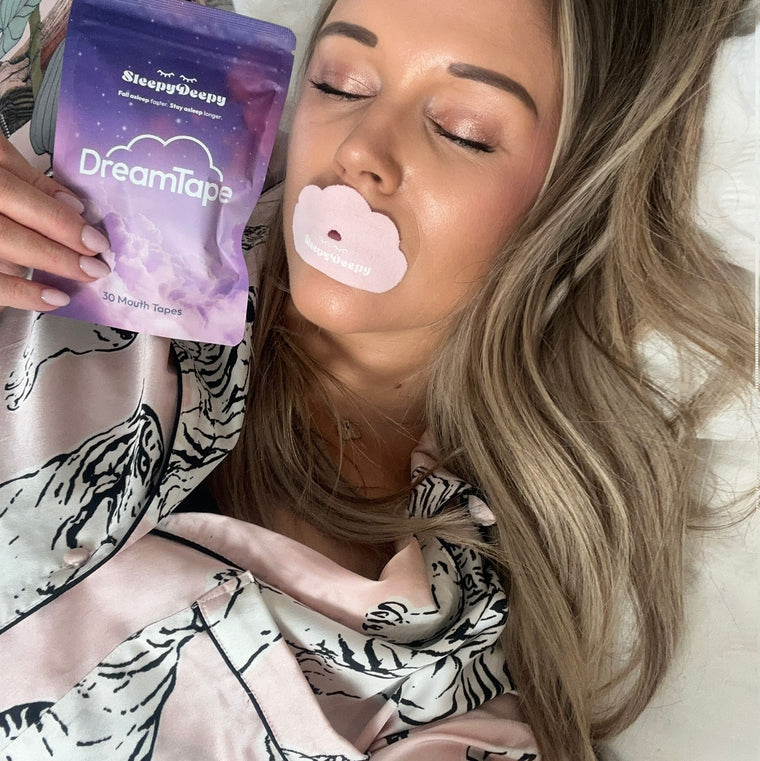
Try DreamTape - gentle mouth tape to encourage nose breathing once the airway is clear.
Try DreamMask - blackout sleep mask to protect the last hours of sleep when early pollen and light conspire against you.
Sleep well. Sleep properly. SleepyDeepy.