
Most of us have a rough idea of what good sleep hygiene looks like: a dark room, a steady bedtime, fewer screens before bed. But one factor barely gets a mention, despite quietly wrecking sleep for a huge number of people - how you breathe once you are asleep.
Specifically, whether you breathe through your nose or your mouth. Mouth breathing at night is so common that it feels normal, but normal is not the same as harmless. If you wake with a dry mouth or sore throat, feel unrested after a full night, or have been told you snore, mouth breathing may well be part of the picture. Here is why it matters and, more importantly, what you can do about it.

Your nose is built for breathing. Your mouth is not.
It sounds obvious said out loud, but the nose and mouth have very different jobs. The mouth is for eating and speaking. The nose is a piece of respiratory equipment, and breathing through it does far more than move air.
Nasal breathing filters and conditions the air. It traps dust and allergens, warms and humidifies each breath, encourages slower, calmer breathing, and produces nitric oxide, which helps widen blood vessels and improves how efficiently your body uses oxygen. Mouth breathing skips all of that - the air arrives cooler, drier and less filtered - and across a whole night those differences add up.
What mouth breathing actually does to your sleep
The effects range from mildly annoying to genuinely significant.
Lighter, more broken sleep
Breathing through the mouth shifts the jaw and tongue and makes the soft tissues of the throat more likely to vibrate or partly collapse. That means more snoring, a less stable airway, and more of the micro-awakenings that pull you out of the deep stages your body relies on. If you often wake feeling flat despite seven or eight hours, this can be why - there is more on that in our piece on signs you are not getting enough deep sleep.
Dry mouth, sore throat and dental problems
Saliva is your mouth's natural defence, neutralising acids and keeping bacteria in check. Breathing through your mouth all night dries it out, leaving conditions that suit the bacteria behind tooth decay, gum disease and bad breath. Less glamorous, but a real cost.
Snoring that disturbs the whole room
Snoring is a sign airflow is obstructed, and it fragments the snorer's sleep too, even if they never remember waking. If yours flares at certain times of year, allergy season is a common trigger, because congestion forces the switch to mouth breathing.
Daytime fatigue and poor focus
Night after night of lighter sleep shows up in the day as tiredness, difficulty concentrating and low mood - often without the underlying cause ever being spotted.
How to tell if you mouth breathe at night
Most of us have no idea how we breathe once asleep, so look for the patterns instead.
Clues to watch for
Waking with a dry mouth or sore throat, cracked lips or waking thirsty, bad breath despite good dental habits, snoring or noisy breathing your partner notices, and restless, broken sleep. If you also gasp, choke or feel overwhelmingly sleepy in the day, take it seriously and speak to a clinician, as mouth breathing can overlap with sleep apnoea.
Why people mouth breathe in the first place
Mouth breathing is usually a response, not a choice - the body will always prioritise airflow.
The usual drivers are nasal congestion (from allergies, a cold, sinusitis or a deviated septum), naturally narrow nasal passages, back-sleeping, which lets the jaw fall open, evening alcohol, which relaxes the airway, and plain habit, where the nose is clear but years of mouth breathing have made it the default. That last group responds very well to gentle retraining.
What to do about it
There is no single fix, but there is a reliable order to work through.
1. Clear the nose before bed
If nasal breathing is the goal, the nose has to be usable. A warm shower before bed, a saline spray or rinse if you are prone to blockage, a cooler and less dusty bedroom, and sensible allergy management all help. Where restricted airflow rather than full blockage is the issue, DreamFlow nasal strips gently open the nasal passage so nose breathing feels easier - part of our wider stop snoring range.
2. Change your sleep position
Back-sleeping lets the jaw drop and the tongue fall back, both of which invite mouth breathing and snoring. Side-sleeping keeps the jaw in a more natural position - see our guide to the best sleeping position if you are a habitual back-sleeper.
3. Calm the nervous system before bed
Stress pushes breathing high and fast into the chest. A short wind-down settles it: breathe in through the nose for a count of four, out through the nose for a count of six, and repeat for ten to fifteen breaths. Simple, but one of the quickest ways to tip the body toward sleep mode.
4. Consider mouth tape - carefully
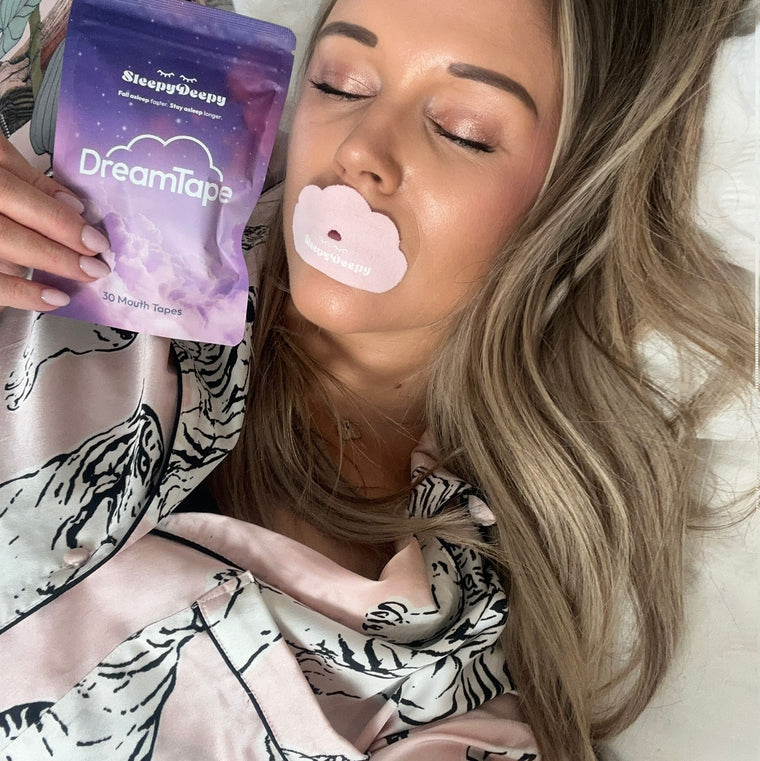
For people who can breathe freely through the nose, gently taping the lips encourages nasal breathing by removing the mouth as an option. It is not for everyone: avoid it if you cannot breathe comfortably through your nose, if you have untreated sleep apnoea, or if a closed mouth makes you anxious, and check with a clinician if in doubt. If you are a good candidate, a purpose-made product beats improvising - our guide to the best mouth tape in the UK compares the options, and you can browse the full mouth tape range. For the safety questions people ask most, see is mouth taping safe.

Frequently asked questions
How do I know if I breathe through my mouth at night?
The tell-tale signs are a dry mouth or sore throat on waking, cracked lips, bad breath despite good dental hygiene, and snoring your partner notices. A sleep-tracking app or a quick phone recording overnight can confirm it.
Is mouth breathing at night dangerous?
On its own it mostly costs you sleep quality, a drier mouth and more snoring. But because it overlaps with obstructive sleep apnoea, persistent loud snoring, gasping or heavy daytime sleepiness are worth getting checked by a clinician.
Will taping my mouth stop it?
For people who can already breathe well through the nose, mouth tape is an effective nudge back to nasal breathing. It is not suitable if your nose is blocked or you have untreated sleep apnoea, so clear the nose first and check with a clinician if unsure.
Why do I only mouth breathe when I have a cold?
Congestion blocks the nose, so the body switches to the mouth as a backup. That is normal and temporary - the aim is just to make sure the habit does not stick once the congestion clears.
Does mouth breathing cause snoring?
It is a major contributor. Airflow through the mouth makes the soft tissues of the throat vibrate more easily, so encouraging nasal breathing often reduces snoring noticeably.
The bottom line
Breathing is something we never think about, which is exactly why mouth breathing at night goes unnoticed for years. The good news is it is one of the more approachable sleep issues to fix. Clear the nose, try side-sleeping, calm your breathing before bed, and - if you are a good candidate - use a gentle tape to steer yourself back to nasal breathing. Small change, real difference to how you feel the next day.
Try DreamTape - soft, breathable mouth tape that gently keeps the lips closed so you breathe through your nose.
Try DreamFlow - nasal strips that open the nasal passage so nose breathing feels easier.
Rest easy. Breathe easy. SleepyDeepy.