Open TikTok at midnight (we don't recommend it, but you've done it) and you'll see the same thing on a loop: someone in a softly-lit bedroom showing off their "sleepmaxxing routine." Mouth tape. Magnesium powder. A red bulb in the lamp. A weighted blanket. A mocktail in a coupe glass. A sleep tracker with a graph that looks suspiciously like a stock chart.
Sleepmaxxing is the biggest sleep trend of 2026, and depending on who you ask, it's either the best thing to happen to wellness in years or a wildly expensive way to lie awake worrying about your sleep score.
The truth, as usual, is somewhere in the middle.
At SleepyDeepy, we've spent years cutting through the noise around deep sleep. We've tried the gadgets, read the studies, and seen which "hacks" hold up in real life and which fall apart by Tuesday. So this is our honest, no-pseudoscience, no-woo guide to sleepmaxxing in 2026 - what works, what's borderline, what's hype, and how to build a routine that actually delivers deeper sleep instead of just better content.

What Is Sleepmaxxing, Exactly?
The short answer. Sleepmaxxing is the practice of optimising every controllable element of your sleep - environment, timing, supplements, tools, routines - to extract the maximum possible recovery, focus, mood, and performance benefits from your nightly rest.
It started, as these things do, on TikTok. Wellness influencers began stacking sleep-related habits the way fitness people stack supplements. Cool room. Blackout curtains. Mouth tape. Magnesium. Cherry juice. Pillow speakers. Sleep trackers. Box-breathing apps. Each habit promised an extra few percent of "deep sleep" - and stacked together, they promised a transformation.
The trend is huge. By early 2026, "sleepmaxxing" content was racking up billions of views, the supplement industry pivoted hard, and brands started releasing products specifically tagged as "sleepmaxxing tools." Even traditional sleep researchers - the kind who'd previously rolled their eyes at viral wellness - have started taking parts of it seriously.
Here's why we're broadly in favour, with caveats.
The good news is that sleepmaxxing has done something useful: it has made a generation of people care about sleep. Treating sleep as something you actively design, rather than something that happens to you when you collapse at 1am, is a meaningful cultural shift.
The bad news is that the trend has also produced a tidal wave of expensive nonsense, anxiety-inducing tracker obsession, and a few practices that are risky. So let's break the whole thing down properly.
The Good: Sleepmaxxing Habits That Genuinely Work
These are the elements of sleepmaxxing with strong evidence, real-world results, and almost no downside. If you only do these and nothing else, you'll already be in the top 10% of sleepers.
1. A Cool, Pitch-Black Bedroom
Your body needs to drop its core temperature by roughly 1°C to fall into deep sleep, and even small amounts of light can suppress melatonin and pull you out of the deeper stages. This isn't influencer talk - it's been replicated in study after study.
The fix is unsexy and cheap: keep the bedroom around 16 to 18°C, and get the room properly dark. "Properly dark" doesn't mean "the curtains are mostly closed." It means you can't see your hand in front of your face.
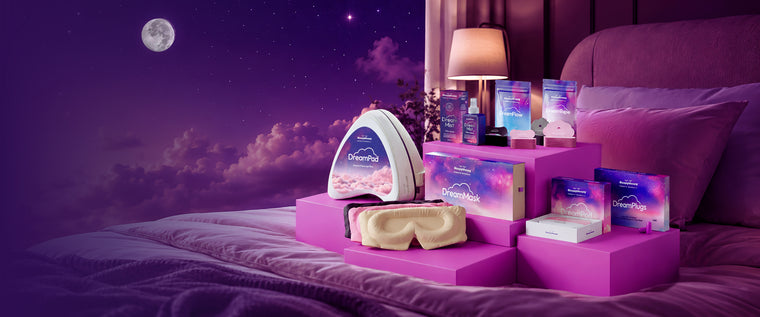
If your room is bright, blackout curtains are great but expensive and not always practical (renting, travelling, partner with different schedule). The fastest fix is a true blackout sleep mask. Our DreamMask uses bamboo silk with a contoured nose-bridge so it actually blocks light without pressing on your eyelashes - most "sleep masks" leak light from underneath, which is why they don't work. If you've been putting up with that, see what to actually look for in a sleep mask.
2. A Consistent Sleep Schedule
Going to bed and waking up at roughly the same time, even at weekends, beats almost every fancy intervention you can stack on top of it. Your circadian rhythm is the master scheduler for melatonin, cortisol, body temperature, and a hundred other things - and it loves predictability.
Most "sleepmaxxers" obsess over the supplements before they fix this. Backwards. A 90-minute weekend lie-in does more damage to your Monday than skipping magnesium would. We've written a full breakdown of how to reset your body clock if yours is currently somewhere between Lisbon and Singapore.
3. Cutting Evening Light (Especially Screens)
Bright light in the two hours before bed pushes your melatonin release back, which delays sleep onset and shortens deep sleep. Phones, laptops, overhead LEDs and the kitchen ceiling spots are all culprits.
The minimum-effort version: dim the lights an hour before bed, switch to warm bulbs in the bedroom, and stop scrolling 30 minutes before lights-out. The maximum-effort version is blue-light glasses and red-bulb lamps, which are fine but not where the gains live for most people. (More detail in our piece on how screens affect your sleep.)
4. A Real Wind-Down Routine
The 20 to 40 minutes before bed are doing a lot of work. They're the bridge between "alert human dealing with life" and "person whose nervous system is ready for deep sleep." If that bridge is just doom-scrolling on the sofa, your brain doesn't get the signal.
What works: a routine your body learns to recognise. Could be a shower, then reading, then a few minutes of slow breathing. Could be journalling. Could be the same scent every night - a few spritzes of lavender, chamomile and vanilla on the pillow turns into a Pavlovian "time to switch off" cue surprisingly quickly. That's the entire reason our DreamMist exists.
What matters less than the specific activities is the consistency. We've laid out how to build a bedtime routine that actually works if you want a template.
5. Mouth Taping (Properly)
This is the most controversial habit on the "good" list, and we want to be careful with it. Mouth taping went viral, then went viral again as a backlash, then settled into a more grown-up middle ground in 2025.
The premise is real: nasal breathing during sleep keeps the airway more stable, supports better oxygenation, reduces snoring, prevents dry mouth, and is associated with better sleep architecture. Mouth breathing does the opposite - and a lot of people do it without realising.
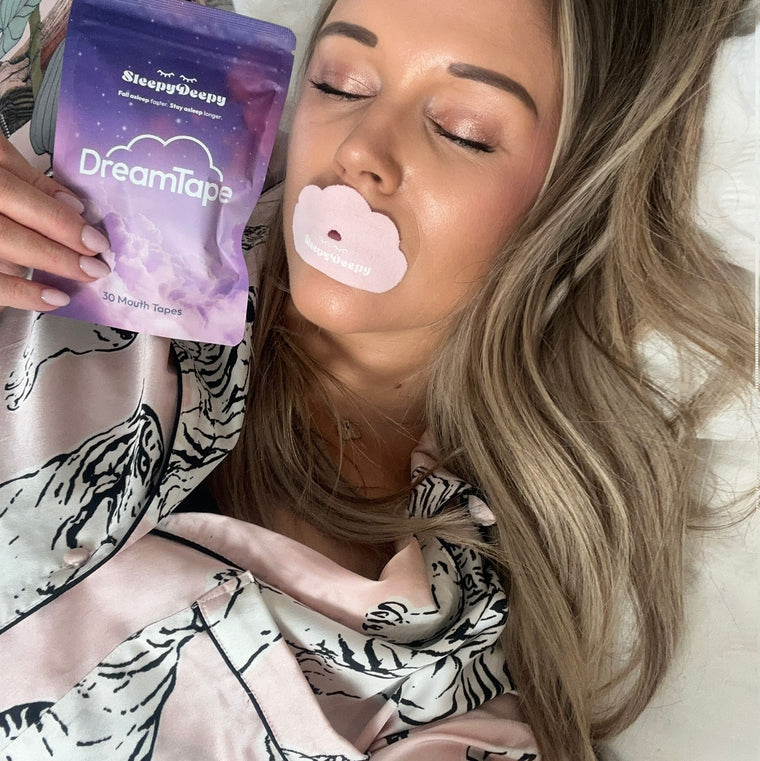
The catch is that the "tape" matters. Slapping duct tape across your face is not the assignment. You want a soft, breathable, hypoallergenic strip that holds gently in the centre of your lips and lets you breathe through the gap if needed. That's why our DreamTape is shaped the way it is.
We've written the long version on whether mouth taping is safe and who should avoid it - please read it before you try. If you have unmanaged sleep apnoea or significant nasal congestion, talk to a clinician first.
The Borderline: Things That Help Some People
This middle tier is where most of the actual sleepmaxxing market lives. None of these are nonsense. None of them are universal cure-alls either. Try them, see if they move the needle for you, and don't feel bad if they don't.
Magnesium and the "Sleepy Girl Mocktail"
Magnesium glycinate or magnesium threonate, taken in the evening, helps some people fall asleep faster and wake up less frequently. It is not a sedative - if you're deficient (and a chunk of the population is), topping up can help. If you're not deficient, it'll mostly do nothing.
The "sleepy girl mocktail" - magnesium powder + tart cherry juice + soda water - got 12,000+ TikTok mentions and is mostly fine. Tart cherry juice has a small amount of natural melatonin and may help. Just don't expect magic. For more options that aren't just supplements, see our breakdown of science-backed melatonin alternatives.
Sleep Audio (Pillow Speakers, Sleep Stories, Brown Noise)
This is one of the most underrated tools on the sleepmaxxing list. Listening to sleep stories, breathwork audio, brown noise, or quiet music can tip a busy brain over the edge into sleep when willpower won't.
The problem is the delivery method. Earbuds fall out, hurt your ears if you side-sleep, and partners hate the dead-eyed stare of someone wearing AirPods to bed. That's exactly why bone-conduction pillow speakers exist. Our DreamPod sits inside your pillowcase, plays only to you, and won't wake your partner. We've gone deep on the difference in DreamPod vs traditional sleep buds.
Knee Pillows and Sleep Posture
If you're a side sleeper and you wake up with hip or lower-back pain, a properly shaped knee pillow can be the difference between dreading mornings and not noticing them. It keeps your spine, hips and knees in alignment so your muscles don't spend the night compensating.
This is one of those things that sounds boring until your back starts hurting at 35. Our DreamPad was designed specifically for this - most "knee pillows" are just rectangles of foam.
Weighted Blankets
The pressure of a weighted blanket triggers a small parasympathetic response - the "rest and digest" branch of your nervous system. For some people (especially those with anxiety or restless legs) the difference is noticeable. For others, it's just a heavy blanket. Worth trying if you can borrow one before buying.
The Hype: Sleepmaxxing Trends to Skip
And now the bit you came for. Some sleepmaxxing content is actively counterproductive, financially absurd, or just nonsense.
Lettuce Water
You boil some lettuce in water and drink it before bed. The internet claims it makes you drowsy because lettuce contains a compound called lactucarium. The actual amount of lactucarium in a cup of lettuce water is roughly equivalent to looking at a picture of a lettuce. Spend the time on a wind-down routine instead.
Stacking Eight Supplements
If your nightstand looks like a chemist's, you're doing it wrong. Most evidence supports magnesium, occasionally L-theanine, occasionally low-dose melatonin under specific circumstances. Stacking ashwagandha + valerian + GABA + 5-HTP + glycine + chamomile + apigenin every night is throwing money at a problem that probably needs better sleep hygiene, not more pills.
Orthosomnia (Tracker Obsession)
This one is the dark side of sleepmaxxing. Orthosomnia is the term researchers use for the anxiety people develop from obsessing over their sleep tracker scores. They wake up, look at a 72%, decide they slept badly, and feel tired all day - even if they slept fine. The tracker becomes the problem.
Trackers are useful for spotting trends over weeks. They are not a daily report card, and the consumer-grade ones cannot reliably distinguish deep sleep from light sleep anyway. Look at the seven-day average. Stop opening the app at 7am.
Extreme Mouth-Taping (Full-Mouth Coverage, DIY Tape)
Tape designed for parcels is not designed for faces. Covering the mouth completely with surgical tape on someone with undiagnosed sleep apnoea can be dangerous. The "controlled" version - a small, breathable strip across the centre - is fine for most healthy adults. The maximalist version is not. (Again: read the safety guide.)
£3,000 Smart Mattresses Before You've Fixed the Basics
If your bedroom is 22°C, the curtains leak light, you scroll TikTok in bed and your schedule swings four hours between weekday and weekend, a temperature-regulating mattress is not your problem. Sort the free things first. The premium kit pays back when the foundations are solid - and largely doesn't when they aren't.
How to Build Your Own Sleepmaxxing Routine (Without Going Overboard)
Here's the framework we use ourselves and recommend to anyone who asks. It's deliberately simple, because elaborate routines are the first thing to fall apart when life gets in the way.
Step 1: Lock in the four free habits first. A consistent schedule, a cool dark room, dim evening light, and a 20-minute wind-down. Run that for two weeks. Most people find the next two weeks of sleep are noticeably better than the previous two months. If they aren't, there's something specific worth troubleshooting before adding tools.
Step 2: Identify your specific problem. Sleep is not one thing. Trouble falling asleep, waking up at 3am, snoring, dry mouth, hip pain, jet lag, a partner who watches autoplaying videos - all different problems with different solutions. Match the tool to the problem instead of stacking tools and hoping.
Step 3: Layer in tools that fix the actual issue. Light leak in the bedroom? A proper blackout mask. Mouth-breathing or snoring? Gentle mouth tape. A racing mind? A pillow speaker with breathwork audio. Hip pain? A knee pillow. Difficulty switching off? A pillow spray as a scent cue. We have ranked the sleep gadgets that actually work in a separate guide if you want the detail on each one.
Step 4: Don't fall in love with your tracker. Use it for trend lines, not daily verdicts. If you feel rested, you slept well - even if the app disagrees. Look at the actual signs of poor deep sleep instead: morning grogginess that doesn't lift, brain fog by 11am, low mood, soreness without obvious cause.
Step 5: Drop what doesn't work. The whole point of sleepmaxxing should be a routine that fits you, not a routine you'd post on Instagram. If something hasn't done anything for you after a fortnight, take it out. A simpler, leaner routine you actually do every night beats an elaborate one you do half the time.
If you'd rather not piece this together yourself, the Deep Sleep Starter Kit bundles the four tools that solve the most common sleep problems for most people - mask, tape, pillow spray and pillow speaker - at a meaningful discount. The full range of better-sleep bundles is built the same way: pre-tested combinations, not random product stacks.

Final Thoughts
Sleepmaxxing's real win in 2026 isn't any one product, mocktail, or tracker. It's that more people now treat sleep as something to design rather than something to suffer.
That alone is a good thing. The best sleeper in your life isn't the one with the most expensive routine - it's the one with the most consistent one. The four free habits at the top of this article will outperform any £200 supplement stack, every time.
If you want to layer in tools, pick the ones that solve a problem you actually have. A mask if your room is bright. Tape if you breathe through your mouth. A pillow speaker if your brain won't shut up. A spray if you need a wind-down cue. A knee pillow if your hips ache. Skip everything else.
That's exactly why SleepyDeepy exists: to help you build a sleep system that does the heavy lifting quietly, every night, without becoming another thing on your to-do list. No woo. No 14-step routines. No sleep-score anxiety.
Just deeper sleep, more nights of the week.
Sleep well. Sleep properly. SleepyDeepy.
Featured in this article:
- DreamMask - Bamboo silk blackout eye mask · £24.99
- DreamTape - Deep sleep mouth tape · £9.99
- DreamPod - Bone-conduction pillow speaker · £28.99
- DreamPad - Ergonomic knee pillow · £17.99
- DreamMist - Lavender, chamomile & vanilla pillow spray · £10.99
- Deep Sleep Starter Kit - The four-tool bundle · £43.99