Obstructive sleep apnoea affects an estimated 1.5 million people in the UK. Most of them do not know they have it.
It is not for lack of symptoms. OSA produces some of the most disruptive and recognisable signs of poor sleep - loud snoring, waking exhausted, falling asleep during the day, a partner who has started sleeping in another room. The problem is that these symptoms are easy to attribute to other things: stress, getting older, working too hard. And because OSA happens while you are unconscious, the most telling events - the breathing pauses - are ones you cannot witness yourself.
This article covers what OSA actually is, how to tell if you might have it, why it matters to address it, and how to get properly tested in the UK.
A note on spelling: in the UK the condition is correctly written as sleep apnoea - the spelling used by the NHS. In the US and internationally it is written as sleep apnea. Same condition, different spelling. If you searched for either version, you are in the right place.

What obstructive sleep apnoea is
During sleep, the muscles throughout the body relax - including the muscles in the throat. In people with OSA, this relaxation allows the soft tissue at the back of the throat to collapse inward, partially or completely blocking the airway. When the airway is blocked, breathing stops. The brain detects the drop in oxygen and triggers a micro-arousal - a brief, partial waking that restores muscle tone and reopens the airway. Breathing resumes, often with a gasp or a snort, and the cycle begins again.
This can happen many times a night. Each event typically lasts between ten seconds and a minute. The person rarely wakes fully and usually has no memory of the interruptions - from their perspective, they slept. From their body's perspective, the night was considerably less restful than it appeared.
The severity of OSA is measured by the Apnoea-Hypopnoea Index (AHI) - the average number of breathing interruptions per hour of sleep. Mild OSA is 5 to 14 events per hour. Moderate is 15 to 29. Severe OSA is 30 or more. Some people with severe untreated OSA experience hundreds of interruptions a night.
Symptoms - including the ones people miss
The textbook symptom is loud snoring with witnessed pauses in breathing. If your partner has seen you stop breathing and then gasp, that is a strong indicator of OSA and warrants prompt investigation.
But many people with OSA sleep alone, or have a partner who is also a heavy sleeper, or have mild enough OSA that the breathing pauses are not dramatic. The subtler symptoms are the ones that get missed:
- Waking feeling unrefreshed despite a full night in bed - consistently, not occasionally
- Excessive daytime sleepiness - falling asleep in meetings, in front of the television, or in the car as a passenger
- Morning headaches, particularly across the forehead, caused by overnight drops in blood oxygen
- Waking with a very dry mouth or sore throat
- Difficulty concentrating or remembering things - sometimes described as "brain fog"
- Irritability or low mood without a clear cause
- Waking frequently to urinate overnight (nocturia) - an often-overlooked OSA symptom
- High blood pressure that does not respond well to medication
None of these individually confirm OSA, but several together - particularly in someone who snores or is overweight - should be taken seriously.
Why OSA goes undiagnosed for years
The average time between OSA onset and diagnosis in the UK is over a decade. There are several reasons for this.
The symptoms are non-specific. Tiredness and difficulty concentrating are extremely common complaints with dozens of possible causes. GPs, under significant time pressure, may not immediately think to ask about sleep.
People normalise the symptoms. If you have always been a heavy snorer, or have always needed three coffees to function in the morning, it becomes your baseline. You do not present it to a doctor because it does not feel like a new problem.
There is also a demographic factor. OSA is more common in men over forty who are overweight, and this group has historically been less likely to discuss health concerns proactively. But OSA also affects women, younger adults, and people of healthy weight - particularly those with smaller jaw structure or enlarged tonsils.
Why it is worth getting checked
The body's arousal response to each apnea event is reliable - you surface briefly, breathing restarts, and the cycle continues. OSA is not acutely dangerous in the way people sometimes fear. But the cumulative effect of consistently fragmented sleep does take a toll.
Most people with undiagnosed OSA spend years putting their tiredness, poor concentration, and low mood down to life being busy. There is also a well-established association between long-term untreated OSA and elevated blood pressure, which matters for overall health over time. Day-to-day, the fatigue from disrupted sleep is worth taking seriously - particularly for anyone who drives regularly.
The encouraging part: treatment is highly effective. CPAP therapy - the standard approach for moderate to severe OSA - resolves the breathing interruptions directly, and most people notice the difference within the first few nights. Getting a diagnosis is the necessary first step, and it is easier than most people expect.
Can you use mouth tape if you have sleep apnoea?
This is a question we take seriously, because mouth tape is a product we make and sell.
Mouth tape is not a treatment for OSA. It does not address the underlying airway obstruction that causes the condition. Using mouth tape in place of investigating or treating diagnosed OSA is not appropriate.
However, OSA and mouth breathing are not the same thing. Many people snore and mouth breathe without having OSA. And some people with mild, managed OSA use mouth tape alongside their primary treatment under medical guidance.
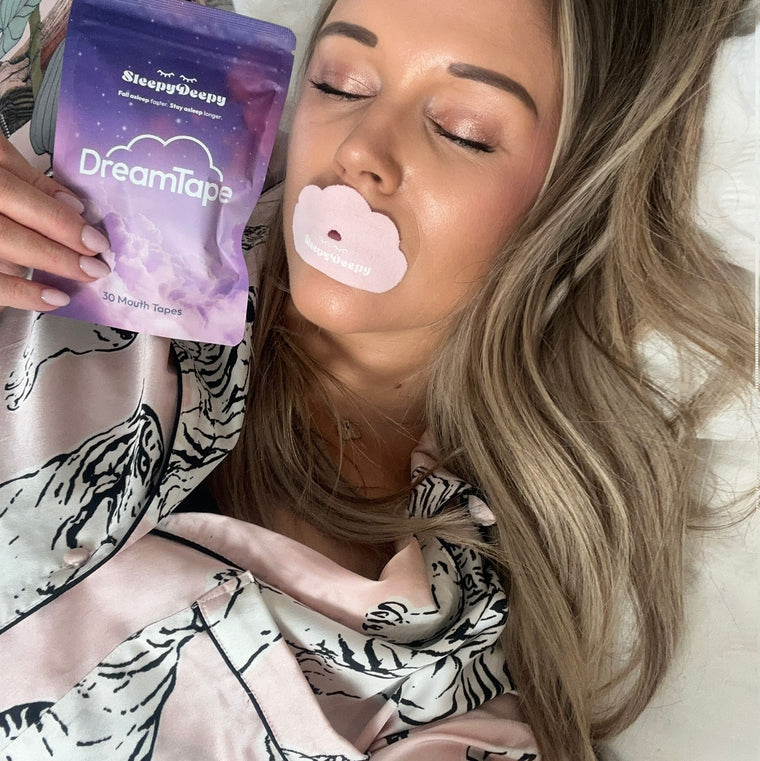
Our DreamTape mouth tape has a vented design - a small opening in the centre of the strip that allows emergency mouth breathing if needed. This makes it meaningfully different from fully sealed tape, and reduces the risk associated with accidental use in someone with an undiagnosed breathing disorder. But we are clear: if you suspect you might have OSA, the right first step is to get tested, not to buy tape.
If you have been tested, do not have OSA, and are looking to address snoring and mouth breathing - DreamTape and DreamFlow nasal strips are designed precisely for that.
How to get tested for OSA in the UK
Via the NHS
The standard route is through your GP. Describe your symptoms clearly - including any witnessed breathing pauses, the consistency of your tiredness, and any of the other symptoms listed above. Your GP can refer you to a sleep clinic where you will be given a home sleep test: a small device worn overnight that records your breathing, oxygen levels, and heart rate. Results are reviewed by a sleep specialist and you will be given an AHI score and, if appropriate, a diagnosis and treatment plan.
NHS waiting times for sleep clinics vary by region. In some areas you can be seen within a few weeks; in others the wait is considerably longer.
Via a private sleep clinic
If you want faster results, private home sleep testing is available from specialist clinics. The Better Sleep Clinic offers home sleep tests that you can book directly, without a GP referral, and receive results and clinical interpretation without the NHS waiting time. This is worth considering if your symptoms are significantly affecting your work, driving, or daily function and you cannot wait months for an answer.
Whichever route you take, a home sleep test is genuinely straightforward - you wear a small monitor overnight at home and return it the next day. There is no clinic stay involved.
What if I get tested and I do not have OSA?
A negative result is genuinely useful information. It means your snoring, dry mouth, and broken sleep are caused by something else - most likely primary snoring driven by mouth breathing, nasal restriction, sleep position, or some combination of the three.
These are things that respond well to straightforward interventions. Keeping the mouth closed overnight with mouth tape, opening the nasal passage with nasal strips, and adjusting sleep position (side sleeping is consistently associated with less snoring) are all effective first steps. They do not require a prescription, a machine, or a diagnosis.
The point is to know which problem you are solving. Testing tells you that.

In summary
OSA is more common than most people realise, and frequently goes unrecognised for years simply because the symptoms are easy to normalise. If this article sounds familiar, a home sleep test is a low-effort way to get an answer - free via the NHS, or quicker via a private clinic if you prefer not to wait.
And if you test negative and want to tackle the snoring and broken sleep that remains: that is where we can help.
Shop DreamTape Mouth Tape | Shop DreamFlow Nasal Strips
Sleep well. Sleep properly. SleepyDeepy.