
The alarm goes off and before you have even opened your eyes properly, there it is: a dull, heavy ache across your forehead or behind your eyes. You have not had a drink, you went to bed at a sensible time, and yet waking up with a headache has quietly become part of your mornings. By the time you have had a coffee and got to work it has usually eased, which makes it easy to shrug off. Until it happens again tomorrow.
So why does a night that is supposed to restore you leave you sore instead, and what can you actually do about it? The honest answer is that morning headaches are almost always a symptom of something that happened while you slept, not a random event. Below we walk through the most common causes, help you work out which one is likely yours, and give you the fixes in the order worth trying them.

Why do I keep waking up with a headache?
The short answer. Waking up with a headache usually means something disturbed your breathing, your muscles or your hydration overnight. The most common causes are (1) disrupted breathing such as snoring, mouth breathing or sleep apnoea, (2) jaw clenching or teeth grinding, (3) dehydration and overnight caffeine or alcohol withdrawal, and (4) poor sleep quality or timing, including sleeping too long.
There are other explanations worth keeping in mind. A cold or blocked sinuses, a pillow that leaves your neck at an awkward angle, a stuffy or overheated bedroom, and certain medications can all do it. Migraine also has a habit of arriving in the early hours. But if you are healthy and it keeps happening, one of the four routes below is usually the culprit. Let us take them one at a time.
Route 1: Your breathing was disturbed overnight
If you snore, breathe through your mouth or stop breathing briefly during sleep, your brain spends the night short of oxygen and heavy on carbon dioxide. Blood vessels in the head widen in response, and you wake with a pressing, often front-of-head ache that eases within an hour or so of being upright and breathing normally. This is the classic pattern in obstructive sleep apnoea, but you do not need apnoea to get a milder version of it. Plain mouth breathing at night dries you out, disrupts deep sleep and often comes with the same dull morning head. A partner who says you snore, or a dry mouth on waking, are the tell-tale clues.
Route 2: You clenched or ground your teeth
Night-time jaw clenching, known as bruxism, loads the muscles around your temples and jaw for hours at a time. By morning those muscles are fatigued and sore, and the pain refers upwards into a tension-type headache that sits around the temples or behind the ears. Bruxism is closely linked to stress and, interestingly, to disturbed breathing too, so Route 1 and Route 2 often show up together. A sore or tight jaw, sensitive teeth, or a dentist who has commented on worn enamel all point this way. Our guide to teeth grinding at night goes deeper on this one.
Route 3: You were dehydrated or in mild withdrawal
Seven or eight hours is a long time without a drink, and if you went to bed already a little dry, your brain feels it first. Alcohol makes this worse because it is a diuretic and it fragments the second half of the night. Caffeine has a sneakier trick: if you drink a lot of it during the day, the overnight gap is long enough for a mild withdrawal headache to start before you wake. If your head clears after a glass of water and your first coffee, this route is the likely one. We cover the mechanics in how caffeine and alcohol quietly ruin your sleep.
Route 4: Your sleep was poor, too short, or too long
Both not enough sleep and too much of it are well-known headache triggers, and irregular timing is the third member of that family. Sleep deprivation lowers your pain threshold and raises stress hormones. Oversleeping, especially a weekend lie-in that is two or three hours later than normal, shifts your body clock and delays your first caffeine, which is why the Saturday morning headache is so common. If your headaches cluster around late nights, early starts or long lie-ins rather than every single day, timing rather than breathing is probably the issue.
Is this your headache?
Tick off the signals that sound like you. The pattern points to the route.
- The ache is there the moment you wake and fades by mid-morning without painkillers.
- Your mouth is dry, your pillow is damp, or your partner says you snore.
- Your jaw feels tight or tender, or your teeth are sensitive first thing.
- It is worse after a few drinks, or on days you skipped water in the evening.
- It shows up mainly after a lie-in, a very late night or a very early start.
- You feel unrefreshed even after a full night, and sleepy during the day.
Two or more from the first three lines is a strong sign your breathing or your jaw is behind it, and that is where to start.
What to do about it
The fix follows the cause, so work through these in order and stop when your mornings improve.
Step 1: Rule out the cheap and obvious (Routes 3 and 4)
For a week, have a large glass of water an hour before bed, keep alcohol to earlier in the evening or skip it, and keep your wake time within an hour of normal even at weekends. Move your last coffee to before 2pm. This costs nothing and clears a surprising number of morning headaches on its own. If yours vanishes, you have your answer.
Step 2: Check your pillow and bedroom (supporting Route 4)
A pillow that tips your head forward or sideways all night strains the neck and feeds a morning headache. Aim for one that keeps your neck in line with your spine in your usual sleeping position. Keep the room cool and crack a window if it feels stuffy; a warm, airless room worsens both dehydration and disturbed breathing.
Step 3: Get your breathing through your nose (Route 1)
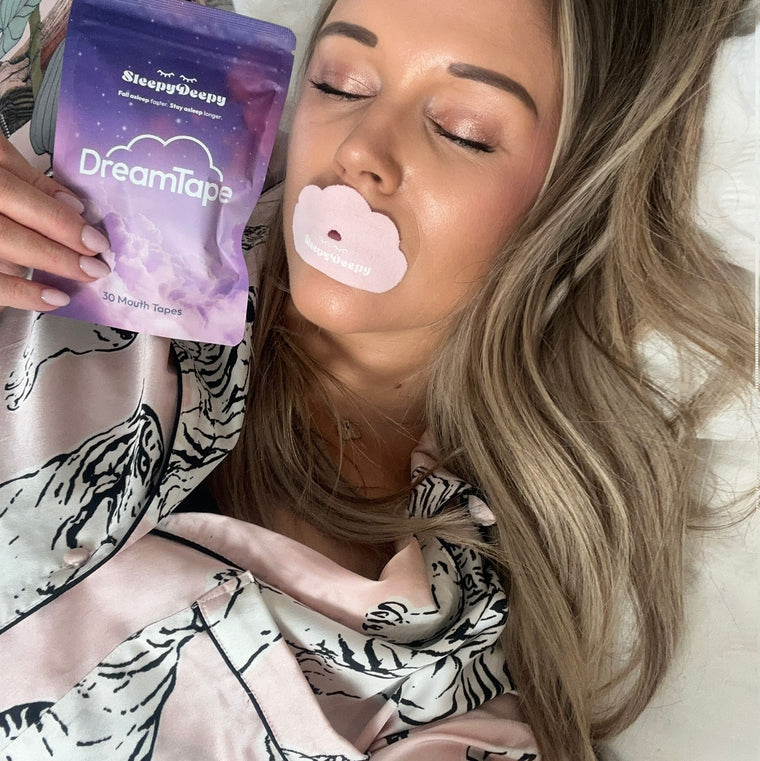
If you wake with a dry mouth or you are told you snore, the goal is to keep your mouth closed and your airway calm overnight. Clear your nose first: a saline rinse or a nasal strip before bed helps if you are congested. Then consider mouth tape. DreamTape mouth tape is a soft, skin-friendly strip that gently encourages nose breathing while you sleep, which reduces the dryness and snoring that drive Route 1 headaches. The honest caveat: only use it when your nose is clear, and not if you suspect sleep apnoea, in which case see Step 5 first. Our best mouth tape UK guide explains how to try it safely, and you can compare options in the mouth tape collection.
Step 4: Take the load off your jaw (Route 2)
If your jaw is tight in the morning, a short wind-down that lowers stress before bed helps more than people expect, and a dentist can fit a night guard to protect your teeth and reduce muscle strain. Because clenching often rides along with mouth breathing, many people find that fixing Step 3 eases Step 4 as well.
Step 5: If nothing shifts, get your breathing checked properly (Route 1)
Morning headaches that come with loud snoring, witnessed pauses in breathing and daytime sleepiness are a recognised sign of obstructive sleep apnoea. That needs a diagnosis, not a sleep aid. Read our guide to sleep apnoea symptoms and testing in the UK and speak to your GP.
"It's just a bit of dehydration, everyone gets it" - is that true?
Partly. Dehydration is a real and common cause, and if a glass of water fixes yours then that is the whole story. But most people are not that dehydrated overnight, and a headache that arrives almost every morning is not normal. Regular morning headaches are one of the most consistent early signs of disturbed breathing during sleep, and they are also a common feature of teeth grinding, which most people do not know they do. Treating a nightly headache as "just one of those things" means the underlying cause, whether snoring, clenching or apnoea, carries on unchecked. It is worth an honest week of the steps above, and a conversation with your GP if they do not help.
When it's different for you
- If you have a history of migraine: early-morning attacks are common and follow their own triggers. Keep a diary and follow your usual migraine plan rather than assuming it is a sleep problem.
- If you suspect sleep apnoea: mouth tape is not appropriate until you have been assessed, because your airway needs a proper diagnosis and possibly CPAP, not a sealed mouth. Start with your GP.
- If you are pregnant: morning headaches with swelling, vision changes or high blood pressure need same-day medical advice. Skip any sleep aids and speak to your midwife.
- If you take regular painkillers: using them on most days can itself cause a rebound headache that peaks in the morning. Ask a pharmacist or your GP about tapering.
When to see your GP
Seeing your GP about a persistent morning headache is a sensible step, not a last resort. Book an appointment if any of these apply:
- You wake with a headache most mornings for more than two or three weeks.
- It comes with loud snoring, pauses in breathing or heavy daytime sleepiness.
- It is severe, wakes you from sleep, or is worse when you cough, bend or lie flat.
- It comes with vomiting, vision changes, weakness, confusion or a stiff neck.
- You are over 50 and this is a new pattern for you.
The NHS has clear guidance on when a headache needs medical attention.
Frequently asked questions
Why does my headache go away after I get up?
A headache that fades within an hour of waking is typical of the breathing-related kind. Lying down and breathing poorly overnight raises carbon dioxide and widens blood vessels in the head; once you are upright and breathing normally, that reverses. It is a strong hint that snoring or mouth breathing is involved rather than dehydration alone.
Can mouth tape stop morning headaches?
It can help if the cause is mouth breathing or mild snoring, because keeping the lips closed encourages nose breathing and reduces the dryness and disruption behind Route 1. DreamTape is designed to support that gently. It is not a treatment for sleep apnoea and should not be used with a blocked nose, so clear your nose first and rule out apnoea if you have the warning signs.
Is waking up with a headache a sign of sleep apnoea?
It can be. Morning headaches are one of the recognised symptoms, especially alongside loud snoring, witnessed pauses in breathing, waking gasping, and daytime sleepiness. On their own they do not confirm apnoea, but with those companions they warrant a GP visit and a sleep test.
Why do I get a headache after sleeping too long?
A long lie-in shifts your body clock, delays your usual caffeine, and often means more time lying still in a warm room getting dehydrated. Any one of those can trigger a headache; together they explain the classic weekend morning head. Keeping your wake time within an hour of your weekday norm usually fixes it.
Could my pillow be causing it?
Yes, especially if the pain sits at the back of the head or in the neck and shoulders. A pillow that is too high, too flat or too soft leaves your neck bent for hours. Choose one that keeps your head level with your spine for your usual sleeping position; our article on the best sleeping position covers what to look for.

The bottom line
Start with the free fixes: water before bed, less alcohol, steady wake times and an earlier last coffee. Check your pillow and keep the room cool. If your mouth is dry and you snore, work on nose breathing, with mouth tape once your nose is clear. If your jaw is tight, look at stress and a night guard. And if the headaches keep coming with snoring and daytime sleepiness, get your breathing assessed.
The occasional morning headache after a late night is nothing to worry about. A headache that greets you most mornings is your body telling you something about the night before, and it is worth listening. Most causes are fixable at home, and the one that is not is very treatable once it is diagnosed.
Try DreamTape - gentle mouth tape that encourages nose breathing so you wake with a clearer head, not a drier mouth.
This article is general information, not medical advice. If your symptoms are persistent or severe, or you are unsure what is causing them, please speak to your GP. SleepyDeepy products are designed to support your sleep and are not a treatment for any medical condition.
Sleep deeply. Wake sharper. SleepyDeepy.