
Your partner is asleep. You are not. Because somewhere between the first hour and right now, a sound started. Low at first. Then louder. Then something that can only be described as a large animal settling in for winter.
Or maybe you're the snorer. You sleep fine. Everyone else does not.
Either way, you want this fixed. So here is a straight guide to what actually causes snoring, what makes it worse, and which solutions are worth trying - and which ones are not.
Why people snore
The short answer. Snoring happens when air passing through your throat causes the surrounding tissues to vibrate. The sound comes from relaxed muscles in the roof of the mouth, tongue, and throat partially blocking the airway and fluttering as air moves past.
That's the mechanism. But the reason those tissues are vibrating - and how loudly - depends on a handful of factors that are worth understanding, because the right fix depends on the cause.
The main causes of snoring
Mouth breathing during sleep. When you breathe through your mouth, air travels a longer, more turbulent path through your throat. The tissues vibrate more. The sound is louder. Most moderate-to-heavy snorers are mouth breathers during sleep - often without realising it. This is also why snoring tends to get worse when you have a cold, when your nose is blocked, or after alcohol.
Sleeping on your back. Gravity. When you lie on your back, your tongue falls backward, partially blocking the airway. This is why a lot of people snore on their back but not on their side - and why a gentle nudge in the night sometimes fixes it for a few hours.
Nasal congestion. If your nose is blocked - from allergies, a cold, a deviated septum, or just nighttime swelling - you breathe through your mouth by default. Mouth breathing causes snoring. Anything that clears your nose helps.
Alcohol. Alcohol relaxes muscles, including the ones in your throat. Even people who don't normally snore will snore after a few drinks. People who already snore get significantly worse. The effect peaks about four hours after drinking - which is often the early hours of the morning when you or your partner jolts awake - one of the most common triggers behind waking at 3am.
Weight. Excess weight, particularly around the neck, puts pressure on the airway and narrows it. This is one reason snoring tends to worsen as people get older and is more common in men, who tend to carry more weight in the neck and chest.
Sleep position and pillow height. Sleeping without enough head elevation can cause the chin to drop and the airway to compress. This is a minor factor for most people but worth checking if nothing else seems to help.
What actually works
1. Switch to nose breathing
This is the single most effective change for most snorers. If you can keep your mouth closed and breathe through your nose during sleep, the turbulence in your airway reduces significantly. For a lot of people, this alone eliminates or dramatically reduces snoring.
The practical challenge: you don't consciously control your breathing while you're asleep. Two tools help here.

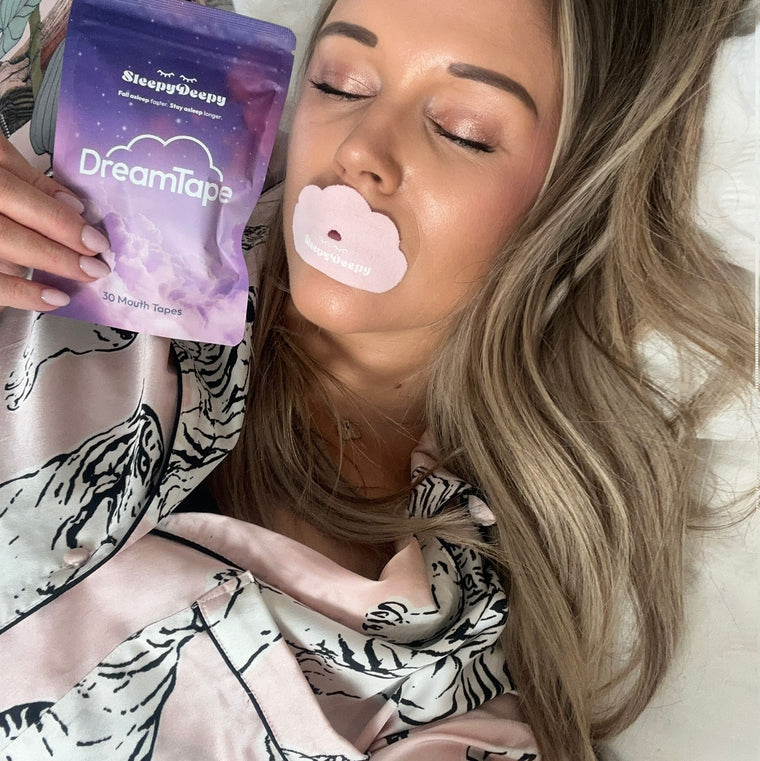
Mouth tape. A small strip of tape placed over the lips while you sleep encourages nasal breathing. It sounds alarming. It isn't. The tape is designed to come off easily and you can breathe around the edges if needed - it's a gentle prompt rather than a seal. Consistent nose breathers who try mouth tape often report deeper, quieter sleep within a few nights. The DreamTape is designed specifically for sleep use - breathable, skin-safe adhesive, and stays in place through the night without irritating the lips.

Nasal strips. Stick-on strips that sit across the bridge of the nose and mechanically widen the nostrils. They increase airflow, make nasal breathing easier, and reduce the tendency to mouth breathe. Particularly useful if congestion is a factor, or if you just find it hard to get enough air through your nose. The DreamFlow nasal strips are worth trying alongside or as an alternative to mouth tape.
For many snorers, mouth tape or nasal strips - or both together - is the whole solution.
2. Sleep on your side
If you know you snore on your back but not your side, this is your simplest fix. The challenge is staying there - most people move during sleep and can't consciously control their position.
A few things that help: a firm pillow behind your back to make rolling over uncomfortable, a body pillow to hug that keeps you naturally on your side, or - the old trick - a tennis ball sewn into the back of a pyjama top. It's not elegant but it works.
3. Clear your nose before bed
If nasal congestion is driving your snoring, clearing it before sleep makes a real difference. Nasal rinsing (a neti pot or saline rinse) removes allergens and reduces swelling. A nasal strip keeps the nostrils open once you're asleep. Avoiding allergens in the bedroom - dustmite covers, no pets in the room, regular washing of bedding - helps if allergies are a factor.
4. Cut alcohol before bed
The straightforward one. Alcohol in the last two to three hours before sleep significantly worsens snoring for most people. This doesn't mean stopping drinking - it means shifting your last drink earlier if snoring is a problem. Three hours of clearance makes a noticeable difference for most people.
5. Raise the head of the bed
Sleeping with the head of the bed raised a few centimetres - or using an extra pillow - can reduce the degree to which the tongue falls back and narrows the airway. Not a complete fix for most people but a useful addition if other changes are helping but not enough.
When snoring is something to take more seriously
Most snoring is a nuisance, not a medical problem. But snoring can be a symptom of obstructive sleep apnea (OSA) - a condition where the airway repeatedly collapses during sleep, causing brief stoppages in breathing.
Speak to your GP if the snoring is accompanied by:
- Gasping, choking, or snorting sounds that wake the snorer
- Witnessed pauses in breathing during sleep
- Excessive daytime sleepiness despite a full night in bed
- Waking with headaches
- Difficulty concentrating or memory problems
These are signs that breathing is being genuinely disrupted during sleep, not just noisy. A GP can refer for a sleep study if OSA is suspected. The solutions above may still help, but OSA usually needs specific treatment.
Frequently asked questions
Why do I snore on my back but not my side?
Gravity. When you lie on your back, the tongue and soft palate drop backward and partially block the airway. On your side, they fall to the side instead. This is one of the most common snoring patterns and one of the most straightforward to fix - stay on your side.
Does mouth tape actually work for snoring?
For snoring caused by mouth breathing - which is most snoring - yes. It keeps the mouth closed and redirects airflow through the nose, which creates less vibration in the throat. It won't fix snoring caused purely by nasal obstruction or anatomical factors, but it's effective enough that it's worth trying before anything more complicated.
Why is my snoring getting worse as I get older?
Muscle tone in the throat decreases with age, which means the tissues are more prone to vibrating. Weight tends to increase with age, which adds pressure on the airway. Hormonal changes - particularly in women post-menopause - also increase snoring risk. It's normal for snoring to worsen over time, and normal for the solutions that used to work to become less effective.
Can losing weight stop snoring?
Often yes, if excess weight around the neck is a factor. Even modest weight loss - 5 to 10 percent of body weight - can meaningfully reduce snoring for people who are overweight. It's not a quick fix, and it won't help if weight isn't the primary driver, but it's a real mechanism.
Do nasal strips work for snoring?
They work well for snoring driven by nasal congestion or restricted nasal airflow. They open the nostrils and make it easier to breathe through the nose, which reduces the tendency to mouth breathe. They won't fix snoring caused by throat anatomy or position. Best used alongside other approaches rather than as a standalone solution.
Is snoring dangerous?
Snoring itself usually isn't. It's a symptom, not a condition. The concern is when it signals something more serious - sleep apnea - which causes repeated breathing stoppages during sleep and carries cardiovascular risks if left untreated. The signs to watch for are listed above. If none of those apply, snoring is almost certainly a quality-of-life issue rather than a health one.
The bottom line
Most snoring comes down to mouth breathing, sleep position, nasal congestion, or alcohol. Fix one of those and you'll likely see a real improvement. Fix two and you may solve it entirely.
Start with the simplest: try a nasal strip for a week. If that helps but doesn't fully fix it, add mouth tape. These two things together address the most common cause of snoring - mouth breathing during sleep - and they cost almost nothing to try.
If it's your partner who snores and they're resistant to trying anything, the nasal strip is usually the easiest sell. Low barrier, no weirdness, visible logic. Get them to try it for a week before suggesting anything else.
Try DreamTape mouth tape - from £9.99
Try DreamFlow nasal strips - from £9.99
If you find that you get off to sleep fine but then can't drop back off once woken, our guide on how to fall asleep faster covers the science of sleep onset and what actually helps.
Sleep well. Sleep properly. SleepyDeepy.