
You close your eyes, drift off, and wake up eight hours later. But what actually happens in between? Most people assume sleep is a single, uniform state of unconsciousness. It is not. Your brain and body cycle through four distinct stages throughout the night, each with a different function, a different biology, and a different vulnerability to disruption.
Understanding the stages is the fastest way to understand why you sometimes wake up feeling genuinely restored - and why, on other mornings, eight hours produces nothing but a foggy head.

The 90-minute sleep cycle
Sleep does not progress linearly through its stages and then stop. It cycles. Each complete cycle lasts roughly 90 minutes, and most people complete four to six of them in a full night. Within each cycle, the proportion of time spent in each stage shifts: early cycles contain more slow-wave (deep) sleep; later cycles contain more REM sleep. This is why the first half of the night and the second half feel different - and why cutting sleep short tends to disproportionately reduce REM.
Stage 1: NREM1 - the transition
Stage 1 is the lightest phase of sleep - the transition between wakefulness and sleep. It typically lasts only a few minutes. Muscle activity slows, eye movements become slow and rolling, and the brain produces a mix of alpha and theta waves.
This is the stage where hypnic jerks occur - the sudden muscular twitch that jolts many people awake just as they are drifting off. This is a normal physiological response, not a sign of any problem.
Stage 1 is easily disrupted. A noise, a light, a partner moving - any of these can pull you back to wakefulness. Minimising environmental disturbances matters most at sleep onset, when the brain is most vulnerable.
Stage 2: NREM2 - consolidation
Stage 2 is a more stable light sleep. Heart rate slows, body temperature drops, and the brain begins producing the characteristic sleep spindles and K-complexes that define this stage. These are thought to play a role in memory consolidation and in suppressing responses to external stimuli - essentially, the brain learning to ignore non-threatening noises so sleep can continue.
Stage 2 accounts for the largest proportion of total sleep time - roughly 50% of a full night. It is important but not the stage most people are deficient in. If you feel unrefreshed despite adequate sleep time, Stage 2 is rarely the problem.
Stage 3: NREM3 - slow-wave (deep) sleep
This is the stage that matters most for physical restoration, and the one most commonly disrupted.
Deep sleep - also called slow-wave sleep or N3 - is characterised by high-amplitude, low-frequency delta waves. It is difficult to wake someone from this stage, and if woken, they typically feel confused and groggy (sleep inertia). The body is at its most physically restorative: growth hormone is released, cellular repair occurs, the immune system consolidates, and memories from the day are transferred to long-term storage.
Most deep sleep is concentrated in the first half of the night. This makes the early sleep cycles disproportionately important. Alcohol consumed in the evening suppresses deep sleep in the first half of the night specifically - which is why drinking can increase total sleep time while producing sleep that feels unrestorative.
What disrupts deep sleep:
- Alcohol - suppresses NREM3 particularly in the first sleep cycles
- Ambient noise - causes microarousals that reset the sleep cycle before deep sleep completes
- Light - even low-level light activates retinal pathways that signal wakefulness, pulling the brain toward lighter stages
- Mouth breathing - associated with reduced oxygen saturation and altered sleep architecture
- Physical discomfort - sustained low-level pain or postural strain prevents full descent into NREM3
Each of these can reduce deep sleep without producing a full awakening - meaning you can sleep through the night and still wake exhausted because the deep sleep portion of your cycles was repeatedly interrupted.
Stage 4: REM - rapid eye movement sleep
REM sleep is the stage most associated with dreaming. The brain is highly active - in some respects more active than during wakefulness. Rapid eye movements occur, heart rate and breathing become irregular, and the body's skeletal muscles are temporarily paralysed (atonia) - a mechanism that prevents you from physically acting out your dreams.
REM plays a critical role in emotional processing and memory consolidation, particularly for procedural memory and emotional memory. Research consistently links REM deprivation to impaired emotional regulation, reduced creativity, and difficulty processing threatening or distressing experiences.
REM sleep is concentrated in the second half of the night. An alarm that cuts sleep an hour short typically removes a full REM cycle - which is why the last hour of sleep is not just a bonus but an important functional component.
Why you feel the difference
Sleep quality is not a matter of hours alone. It is a matter of how much of each stage you complete, and how many times those stages are interrupted before they can do their job.
A night of eight hours fragmented by noise, light, or alcohol can deliver significantly less deep sleep and REM sleep than six undisturbed hours. The biology does not care how long you were in bed - only what happened while you were there.
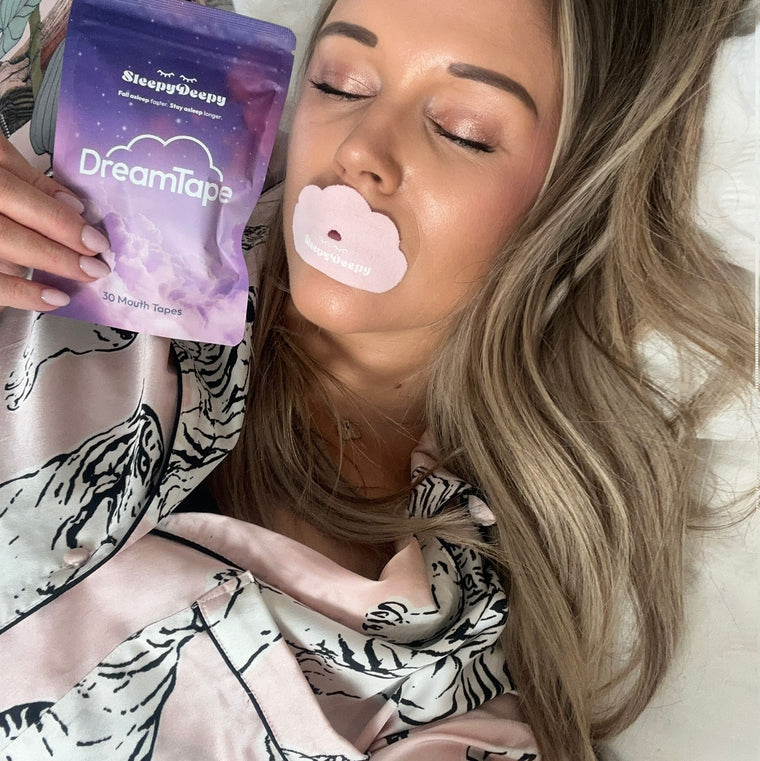
The practical implication is straightforward: protecting sleep quality matters as much as protecting sleep duration. Blackout masks eliminate the light that pushes the brain toward lighter stages. Earplugs reduce the noise that triggers microarousals. Mouth tape and nasal strips correct breathing patterns that alter sleep architecture. None of these extend the night - they protect what happens within it.

The morning test
A reliable rough indicator of sleep stage quality: if you wake naturally without an alarm and feel alert within fifteen minutes, you are likely completing your cycles adequately. If you consistently need an alarm, feel groggy for extended periods, or feel unrefreshed despite eight-plus hours, the issue is almost certainly quality rather than duration.
More sleep is not always the answer. Better sleep - which means fewer interruptions to the stages that restore you - usually is.