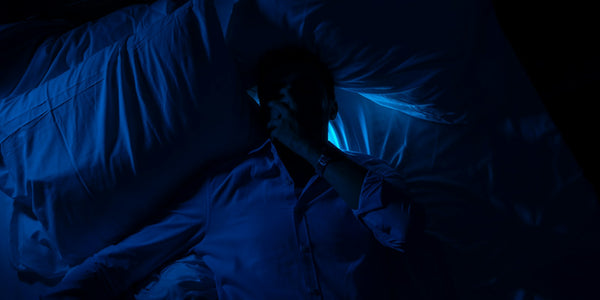

You fall asleep fine. Then somewhere around 3am your eyes open, your mind switches on, and that is it. Wide awake. Sometimes for twenty minutes, sometimes for two hours, sometimes until the alarm. If you have started to dread it, you are in very large company - waking up at 3am is one of the most common sleep complaints there is.
So is something wrong with you? Almost always, no. But "it is normal" is not much use at 3.15am, so this article does two things: it explains what is actually pulling you out of sleep at that hour, and it gives you a running order for fixing it, starting with the changes that cost nothing.

Why do you wake up at 3am specifically?
The short answer. Waking at 3am is usually the overlap of five things: (1) your sleep is naturally lightest in the second half of the night, (2) cortisol begins rising in the early hours, (3) alcohol wears off after three to four hours, (4) your bedroom warms up or dries out, and (5) something small - noise, a full bladder, a dry mouth - is enough to tip you over. It is rarely one cause. It is usually the stack.
Worth saying plainly: brief waking in the small hours is a normal feature of human sleep, not a fault. What is not inevitable is being unable to get back down again. That part is usually driven by something on the list above, and most of the list is fixable. Here are the five, one at a time.
Cause 1: you are simply closer to the surface
Your night is not one flat block of sleep. You move through cycles of roughly 90 minutes, and the first half of the night is weighted towards deep, restorative sleep while the second half tilts towards lighter REM sleep. Go to bed at 11pm and 3am lands you squarely in the shallow end. A noise that would not have touched you at midnight can lift you clean out of sleep. If the stages are new to you, our guide to the different stages of sleep covers them properly.
Cause 2: the early-morning cortisol rise
Cortisol starts climbing hours before your alarm. That is by design - it is part of what gets you out of bed. But stress and anxiety exaggerate the rise, and an exaggerated rise at 3am feels like a switch being thrown inside your head. This is why 3am waking travels with anxiety so often. It is not that worry creates a unique sleep disorder; it amplifies something that was going to happen anyway. There is more on breaking that loop in how stress and anxiety sabotage your sleep.
Cause 3: alcohol wearing off
Alcohol is a sedative for three or four hours and something closer to a stimulant after that. It gets you under quickly, then as it clears, the sedative effect reverses and sleep becomes lighter and more broken. A 10pm nightcap and a 3am wake-up are not a coincidence, they are a timetable. There is more on the mechanism in how alcohol disrupts your sleep cycle.
Cause 4: a warm, dry bedroom
Core body temperature rises in the early hours as part of the waking process. If the room is already warm, or you are under too much duvet, you hit that threshold earlier than you meant to. Dry air compounds it: central heating strips the moisture out of the room, which dries your nose and throat, and a dry throat is its own reason to surface.
Cause 5: the small physical trigger
Something has to actually tip you over, and it is usually mundane. Traffic starting up, the heating clicking on, a partner moving, a full bladder, or a dry mouth from breathing through your mouth all night. That last one is far more common than people realise, and it is worth ruling out - see dry mouth at night for why it happens and what stops it.
Is this your 3am?
The more of these you recognise, the more likely it is you are dealing with something fixable rather than bad luck:
- it happens at roughly the same time most nights, not randomly
- you fall asleep easily at bedtime, and the problem is staying asleep
- you wake with a dry mouth, or reach for water before you are properly awake
- it is worse on nights you have had a drink, even one or two
- your mind is racing within seconds of waking rather than drifting
- the bedroom feels warm or stuffy when you surface
Three or more, and there is almost certainly a lever to pull below.
What to do about it
The fix follows the cause, so work through these in order. The free ones come first for a reason - for a lot of people the problem is solved before step three.
Step 1: move your last drink earlier
If alcohol features at all, this is the highest-value change on the list and it costs nothing. Aim for three hours between your last drink and sleep. That is a 9pm cut-off if you go to bed at midnight, or 8pm if you turn in at 11. Earlier than feels necessary, but the effect on the second half of the night is large and fairly quick to notice.
Step 2: cool and air the room
Somewhere around 16 to 18 degrees suits most people. Turn the heating down overnight, air the room during the day, and take a layer off the bed before you add anything else. In a dry house over winter, a bowl of water by the radiator is a cheap first try. Some people find that keeping their feet cool is the whole answer.
Step 3: deal with the dry mouth
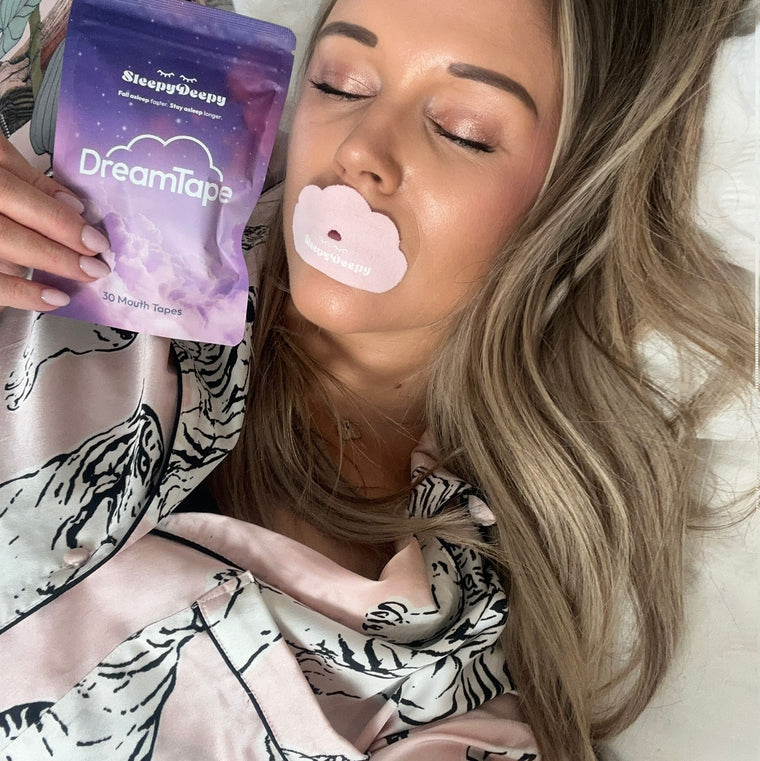
If you wake parched, the odds are you are breathing through your mouth all night, and no amount of water at the bedside fixes the cause. Getting back to nasal breathing does. Our gentle mouth tape for nasal breathing is the simplest way to keep your lips together overnight, and the wider mouth tape range covers different sizes and skin sensitivities. One honest caveat: only if your nose is genuinely clear, and not if you have or suspect sleep apnoea. Read is mouth taping safe first, and our buyer's guide to the best mouth tape in the UK if you want to compare options.
Step 4: lower the stress load before bed, not at 3am
If your mind is racing the moment you wake, the work happens earlier in the evening. A predictable 30 to 60 minute wind-down, no news or work email in the final hour, and something that actively calms rather than just stops the stimulation. A consistent scent helps here because the association builds over time: our lavender pillow spray is designed for exactly that job, and the guide to the best pillow sprays in the UK explains what to look for if you want to compare the full range.
Step 5: give the waking mind something to land on
Do not reach for your phone. Five minutes of screen at 3am can cost you another hour, because light suppresses melatonin and tells your brain the day has started. Audio is the better answer, because it occupies the mind without waking it up. A pillow speaker plays quietly into your ear on a timer, without a screen and without disturbing anyone beside you.
Step 6: if you are still awake after 25 minutes, get up
It feels counterintuitive and slightly miserable, and it works. Lying awake for long stretches teaches your brain that bed is a place for being awake. Get up, do something dull in low light, and go back when you actually feel sleepy. For more on getting back down, see how to fall asleep faster.
"Everyone wakes in the night, it's normal" - is that true?
Up to a point. Brief awakenings between sleep cycles are completely normal, and most people have several a night without ever remembering them. So the waking itself is not the problem, and treating it as one tends to make it worse, because frustration is alerting. What is not normal, and not something you simply have to accept, is being awake for an hour or more several nights a week and feeling wrecked the next day. At that point it has stopped being ordinary sleep architecture and started being something worth investigating properly.
When it's different for you
- If you are going through menopause: night sweats and hormonal shifts are a distinct cause with distinct fixes. Start with menopause and sleep instead.
- If you work shifts: the timing advice here assumes a conventional night. Our guide to sleeping well when you work nights is a better fit.
- If early waking comes with persistent low mood: waking very early and being unable to get back to sleep is a recognised symptom of depression. That is a GP conversation, not a sleep hygiene problem.
- If you snore heavily or have been told you stop breathing: do not use mouth tape, and see the section below first.
When to see your GP
Most 3am waking is a nuisance rather than a warning sign, and a GP appointment is a sensible early step rather than a last resort. Book one if you recognise any of these:
- gasping or choking awake, or a partner noticing that you stop breathing during sleep
- waking drenched in sweat most nights
- heavy daytime sleepiness despite spending enough hours in bed
- early waking alongside persistent low mood or loss of interest in things
- needing to pass urine several times a night
The NHS guidance on insomnia is a sensible place to read further before you go.
Frequently asked questions
Is waking at 3am every night normal?
Brief waking at that hour is normal, because the second half of the night is naturally lighter. What is not normal is regularly being awake for an hour or more, or feeling exhausted the next day. That points to a cause worth finding rather than something to live with.
Can anxiety cause you to wake up at 3am?
Yes. Anxiety exaggerates the natural early-morning cortisol rise, so the alerting effect hits harder, and it gives your mind more to grab onto when you surface. Lowering the stress load in the hour before bed is the most direct route in, which is what a proper bedtime routine is for.
Does alcohol cause 3am waking?
Very commonly. Alcohol clears over three to four hours, and as it does, its sedative effect reverses. Fall asleep at 11pm after drinking and you are likely to surface around 2 to 3am. Moving your last drink earlier is the single highest-impact change most drinkers can make.
Should I get up if I wake at 3am?
If you are back asleep within 15 to 20 minutes, no. Beyond that, getting up and doing something calm in low light works better than lying there getting frustrated, because it stops your brain associating bed with being awake.
What should I listen to at 3am to get back to sleep?
Something with low cognitive demand - rain, white noise, slow instrumental music, or a calm podcast with no narrative tension. The aim is to give your mind just enough to hold onto that it stops generating its own material. Our roundup of the best sleep sounds has specific suggestions.

The bottom line
Waking at 3am is normal biology plus something making it worse. Work the order: move the last drink earlier, cool and air the room, fix the dry mouth, lower the evening stress load, give your mind something to land on, and get up if you are still awake after 25 minutes. Most people find their answer in the first three.
And be kind to yourself about the rest. A wakeful night now and then is part of being human, not a failure of discipline. It is the pattern that matters, and patterns respond to changes.
Try DreamMist - lavender pillow spray to anchor your wind-down routine.
Try DreamPod - pillow speaker for sleep sounds, white noise and guided meditation.
This article is general information, not medical advice. If your symptoms are persistent or severe, or you are unsure what is causing them, please speak to your GP. SleepyDeepy products are designed to support your sleep and are not a treatment for any medical condition.
Sleep well. Sleep properly. SleepyDeepy.