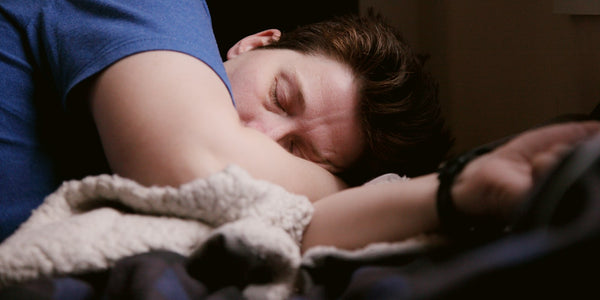

If you snore, you've probably had someone suggest mouth taping at some point. The idea is appealingly simple: stick some tape over your mouth at night, breathe through your nose instead, and wake up having bothered everyone slightly less. But is it actually that straightforward?
Here's an honest look at what the science says, who it works for, and who should probably try something else first.

Why Do People Snore?
The short answer. Snoring happens when air flowing through your throat causes the soft tissues there to vibrate — like a flag in the wind. When you breathe through your mouth, the airflow takes a more turbulent path, which makes those tissues shake more vigorously.
Mouth breathing is one of the most common contributors to snoring. You might breathe through your nose during the day, but as soon as you fall asleep and your muscles relax, your jaw can drop and your breathing pattern shifts. If your nasal passages are even slightly congested, mouth breathing becomes the default.
Other factors play in too: sleeping on your back, alcohol before bed, a dry bedroom, and being overweight can all make snoring worse. But plenty of people who snore are in perfectly good health — snoring doesn't automatically mean there's a medical problem, though it can sometimes be a symptom of one.
How Mouth Tape Helps With Snoring
The theory is straightforward. By keeping your mouth closed, you shift breathing toward your nose, where airflow is more controlled and less likely to rattle your throat tissues. Less vibration, less snoring.
Some research backs this up. A small study found that people with mild sleep-disordered breathing who wore mouth tape showed significantly reduced snoring compared to controls. The mechanism makes sense: nasal breathing is associated with better oxygen uptake, better airflow regulation, and — as we cover in our guide to how mouth breathing affects your sleep — better overall sleep quality.
The honest caveat: the evidence base is still limited. There's a lot of enthusiasm online, but many of the claims come from anecdote rather than large, rigorous trials. Mouth taping works for some people, doesn't do much for others, and the determining factor is usually whether mouth breathing is actually causing your snoring in the first place.
Does Mouth Tape Stop Snoring? What the Evidence Actually Shows
If your snoring is primarily driven by mouth breathing — you wake up dry-mouthed, you tend to breathe through your mouth during the day, your jaw drops open at night — then mouth taping has a reasonable chance of helping.
If your snoring is caused by something else — excess weight, nasal obstruction, alcohol relaxing your throat, sleep apnoea — then keeping your mouth shut won't get to the root of it.
The honest answer is: try it and see. The investment is low. If after a week you're snoring less and sleeping better, you have your answer. If nothing changes, something else is driving it and you should investigate further. Our guide to what causes snoring covers the other levers worth pulling.
Who Mouth Tape Is NOT Suitable For
This is the section worth reading carefully.
- Untreated sleep apnoea: If you have obstructive sleep apnoea — where your airway collapses repeatedly during sleep — mouth taping can be dangerous. You need medical treatment (CPAP, positional therapy, or surgical options), not tape. If you suspect sleep apnoea (gasping during sleep, excessive daytime tiredness, your partner watching you stop breathing), see a doctor before trying anything else.
- Significant nasal congestion: If you genuinely can't breathe through your nose — chronic allergies, a deviated septum, current cold — mouth tape isn't appropriate. You'd be blocking the only functioning airway.
- Young children: Not recommended without explicit medical guidance.
- Anyone who feels anxious about restricted breathing: If the idea of having your mouth taped makes you panicky, that's important information. Don't push through it.
If you're unsure whether any of these apply to you, our full piece on whether mouth taping is safe covers this in more detail.
How to Use Mouth Tape for Snoring
If you've ruled out the above and want to try it, here's the sensible approach:
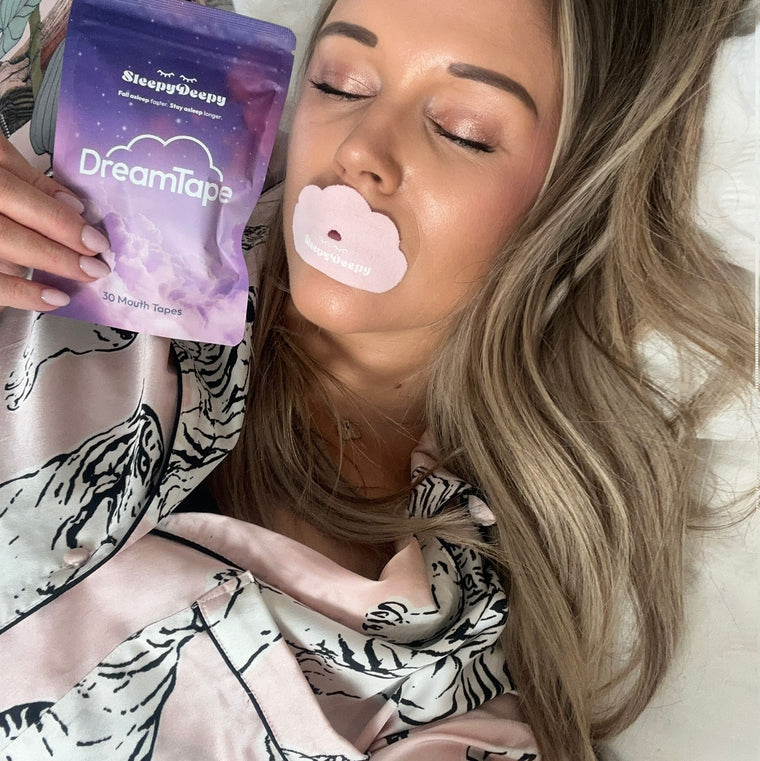
- Use tape designed for the job. Don't use Sellotape or any general adhesive. You want something hypoallergenic, gentle on skin, and designed to come off cleanly in the morning. DreamTape is designed specifically for this — skin-safe adhesive, a small central vent so you're never fully sealed, and comfortable enough for daily use.
- Make sure your nose is clear first. Blow your nose before bed. If it's partially blocked, consider a nasal strip worn over the bridge of the nose alongside the mouth tape — the two work well together.
- Try it while you're awake first. Wear a strip on the sofa for 20 minutes. Get used to what it feels like. Notice that you can breathe fine.
- Start with a half-strip if you're anxious — just over the centre of your lips rather than the full width.
- Give it at least five nights. The first night often feels unfamiliar. Most people adapt quickly.
- Stop if you feel any distress. If you wake up unable to breathe or feeling panicky, remove it immediately and don't try again without medical input.
Frequently Asked Questions
Will mouth tape stop my snoring completely?
Possibly, if mouth breathing is the main driver. Some people notice a significant reduction from night one. Others find partial improvement. If your snoring has multiple causes, mouth tape may reduce but not eliminate it. It's one lever, not a magic fix.
Can I use mouth tape if I have sleep apnoea?
Not without medical advice first. If you have diagnosed, untreated sleep apnoea, mouth tape is not appropriate. If you're on CPAP with a nasal mask, some users find mouth tape helpful for keeping their mouth closed — but check with your sleep specialist before adding it to your routine.
What if the tape falls off during the night?
Common in the first few nights, especially if you move a lot. Make sure lips are clean and dry before applying. Let any lip balm absorb fully first. Press the strip firmly for a few seconds after sticking. A slightly smaller strip can also help if you find a full-width one lifts at the edges.
How quickly will I see results?
Some people notice a difference immediately. For others it takes a week or two as nasal breathing becomes more habitual. If you've seen no improvement after two weeks, mouth breathing probably isn't the main cause of your snoring.
Is mouth tape the same as a chin strap?
Similar idea, different execution. Chin straps wrap around your jaw and head to hold your mouth closed. Many people find them uncomfortable and they can shift during the night. Mouth tape sits directly on the lips and tends to be more discreet and comfortable for everyday use. See our guide to the best mouth tape in the UK for a full comparison of options.
The Bottom Line
Mouth tape is worth trying if you're a mouth breather and your snoring is driving you (or your partner) up the wall. The evidence is modest but the risk is low, the cost is minimal, and for a meaningful number of people it makes a real difference.
The keys are: use it safely, use a product designed for sleep, and be honest with yourself about whether it's working. If it doesn't improve things after a fortnight, look at the other factors — sleeping position, alcohol, weight, nasal health — rather than persisting with something that isn't addressing your root cause.
Ready to try it? Shop DreamTape here — hypoallergenic, vented, and designed for nightly use.
Sleep well. Sleep properly. SleepyDeepy.