
If you regularly feel groggy, unfocused, or physically drained despite getting “a full night’s sleep,” the issue may not be how long you’re sleeping, but how deeply you’re sleeping.
Deep sleep is one of the most restorative stages of your sleep cycle. It’s when your body does most of its overnight repair work, and when that stage gets disrupted, you can feel the effects the next day (even if you don’t remember waking up).
Below are the most common signs you may not be getting enough deep sleep, why they happen, and gentle, lifestyle-focused ways to support deeper rest.
What Is Deep Sleep, and Why Does It Matter?
Deep sleep (also called slow-wave sleep) is the stage where your body shifts into “repair mode.”
During this phase:
- Your muscles repair and rebuild
- Your immune system strengthens
- Growth hormone is released (important for recovery)
- Your heart rate and breathing slow
- Your brain clears metabolic waste and “resets”
In short: deep sleep is when your body does its most important overnight work.
If you’re getting enough hours but not enough deep sleep, you can wake up feeling like your sleep didn’t “count.”
How Much Deep Sleep Do You Actually Need?
There’s no single perfect number, but most adults tend to spend roughly 15–25% of the night in deep sleep. It’s also normal for deep sleep to be heavier in the first half of the night and lighter towards morning.
What matters most is consistency: if your deep sleep is being repeatedly shortened (by wake-ups, stress, breathing issues, alcohol, light, or an inconsistent schedule), you’ll feel it.

Signs You’re Not Getting Enough Deep Sleep
1. You Wake Up Feeling Unrested, Even After 7–8 Hours
This is one of the clearest signs. You’ve done the “right” thing by getting enough time in bed, but your body still feels undercharged.
You might notice:
- Heavy limbs or sluggishness in the morning
- The feeling that you “never really slept”
- A short burst of alertness… followed by a quick crash
This often happens when sleep is fragmented, even tiny awakenings can interrupt deeper stages before they’ve had time to do their full job.
2. You Rely Heavily on Caffeine to Function
If coffee feels less like a preference and more like a life support system, it may be compensating for poor overnight recovery.
A lack of deep sleep can leave your nervous system under-restored, leading to:
- Strong morning grogginess
- Afternoon crashes
- Feeling “wired but tired”
Caffeine can mask fatigue, but it doesn’t replace the repair work deep sleep provides, and late or frequent caffeine can make deep sleep harder to reach the next night.
3. Brain Fog and Poor Focus During the Day
Deep sleep is strongly linked to mental clarity.
Without enough of it, you may notice:
- Trouble concentrating
- Slower thinking
- Forgetting small details
- Feeling mentally “cloudy”
This can happen because deep sleep supports memory processing and helps clear metabolic by-products that build up during waking hours. When that clean-up doesn’t happen properly, the next day can feel like you’re running with a low battery.
4. You Feel Physically Sore or Run-Down (Even If You Didn’t Train Hard)
Deep sleep is essential for physical recovery, not just for athletes, but for everyone.
Signs can include:
- General body aches
- Lingering soreness
- Feeling physically “depleted” without a clear cause
If your body doesn’t spend enough time in deep sleep, it doesn’t get the same opportunity to fully reset tissue, inflammation, and recovery processes overnight.
5. You Wake Up Frequently (or You’re a “Light Sleeper” Lately)
Deep sleep usually happens in longer, uninterrupted blocks, especially early in the night.
If your sleep is broken by:
- Restlessness
- Snoring, gasping, or mouth breathing
- Dry mouth or thirst
- Light awakenings you barely remember
…your deep sleep may be getting cut short before it has time to consolidate.
Even if you don’t fully “wake up,” micro-arousals can shift you into lighter sleep stages and reduce deep sleep overall.
6. Your Mood Feels Off for No Clear Reason
Deep sleep doesn’t just affect your body, it affects your emotional resilience.
You might feel:
- More irritable
- More sensitive to stress
- Emotionally flat or low-energy
- Overwhelmed by small things
This isn’t just “in your head.” Deep sleep supports nervous system recovery and helps regulate stress hormones. When it’s lacking, the world can feel louder, harder, and more draining.
7. You’re Getting Sick More Often (or You Take Longer to Bounce Back)
Deep sleep and immune function are closely linked. If you’re consistently not getting restorative sleep, you may notice you:
- Catch colds more easily
- Recover more slowly
- Feel generally “run down”
This is one of those subtle signs that’s easy to ignore, until your body forces you to pay attention.
Why Deep Sleep Gets Disrupted
Deep sleep is surprisingly sensitive. Several common habits and conditions can reduce it, including:
- Mouth breathing or restricted nasal airflow
- Late-night screen exposure or bright light
- Alcohol close to bedtime
- An inconsistent sleep schedule
- Chronic stress or elevated evening cortisol
- Overheating at night
- Late heavy meals (especially very spicy or high-fat)
Sometimes it’s not one “big” problem, it’s a few small things stacking up.

How to Support Deeper, More Restorative Sleep
You don’t need drastic changes. Deep sleep improves most reliably through small, consistent shifts that make sleep more stable and less interrupted.
1. Support Nasal Breathing at Night
Nasal breathing tends to be calmer and more stable, with better airflow regulation and oxygen delivery. If you suspect mouth breathing, a few gentle steps can help:
- Keep your bedroom air comfortably humid (dry air often leads to dry mouth and open-mouth breathing)
- Try nasal hygiene: saline rinse or a warm shower before bed
- Consider whether congestion, allergies, or a blocked nose are part of the pattern
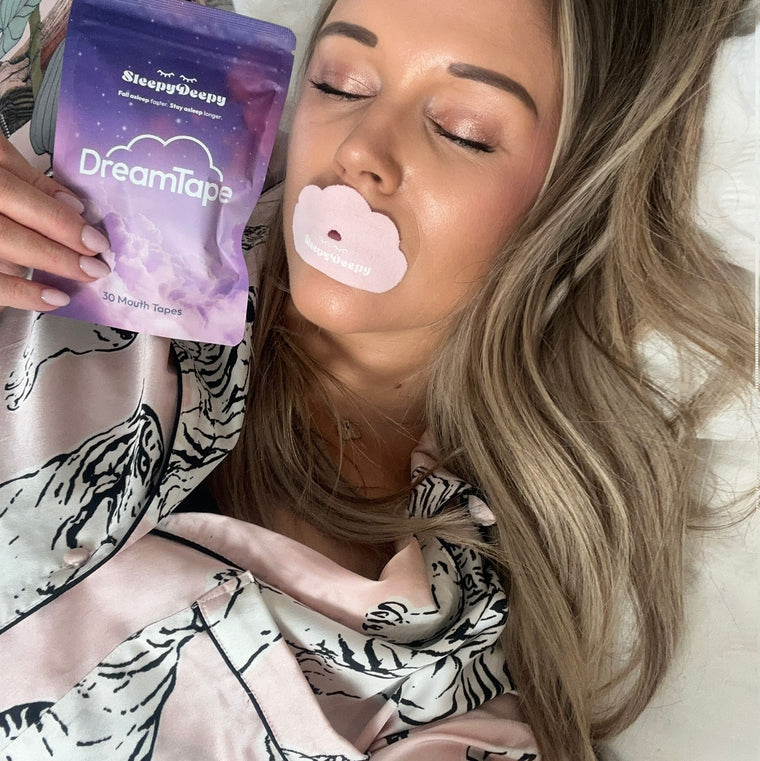
Some people explore gentle tools like sleep tape to encourage nasal breathing, but it should always be used thoughtfully, and avoided if you have nasal obstruction, breathing conditions, or any concern about safe airflow. If you snore loudly, gasp, or wake up choking, it’s worth discussing with a healthcare professional (those can be signs of sleep-disordered breathing).
2. Build a Wind-Down That Actually Lowers Your System
Deep sleep is easier to access when your nervous system is calm before bed.
Try a simple “downshift routine” 45–60 minutes before sleep:
- Lower lights (your body takes brightness as a cue to stay alert)
- Avoid stimulating content (work emails, intense shows, doom scrolling)
- Do 3–5 minutes of slow breathing or light stretching
- Keep your last 10 minutes quiet and boring on purpose
You’re not trying to “force sleep.” You’re creating the conditions where sleep happens naturally.
3. Keep Sleep and Wake Times Consistent (Even More Than You Think)
Deep sleep thrives on rhythm. When your schedule swings, your sleep stages can become less predictable and more easily disrupted.
If you want the biggest impact with the smallest change:
- Keep wake time within about 30–60 minutes, even on weekends
- Let bedtime drift slightly, but protect your morning anchor
This stabilises your internal clock, and stable clocks tend to produce deeper sleep.
4. Protect the First Half of the Night
Because deep sleep is heavier earlier, the start of your night matters more than most people realise.
A few things that commonly reduce deep sleep early on:
- Alcohol (even if it “knocks you out”)
- Late caffeine
- Going to bed too hot
- Going to bed stressed and overstimulated
If you’re choosing where to focus your effort, start here.
5. Optimise Your Bedroom for Fewer Micro-Wake-Ups
Deep sleep doesn’t require perfection, but it does require fewer interruptions.
Quick checks:
- Is your room cool enough? (Overheating is a major sleep disrupter.)
- Is it truly dark? (Even small light sources can fragment sleep.)
- Are you waking from noise? (Consistent sound is often easier for the brain than unpredictable sound.)
- Is your pillow helping you breathe comfortably, or forcing awkward neck angles?

A Simple “Tonight” Plan
If you want a gentle starting point, try this for the next 3 nights:
- No bright screens in the last 45 minutes
- Lower lights one hour before bed
- Keep the room cooler than you think you need
- Do 3 minutes of slow breathing
- Aim for the same wake time tomorrow
Small changes, repeated, add up fast.
The Takeaway
If you’re waking up tired, foggy, sore, or emotionally drained, your body may be telling you it’s not getting the restorative sleep it needs. The good news is that deep sleep often improves when you focus on stability: breathing, consistency, a calmer nervous system, and fewer interruptions, not quick fixes.
At SleepyDeepy, our approach is rooted in helping you understand why your sleep feels off, so you can make informed, sustainable changes. If you’d like to explore guides and tools that support calmer breathing and deeper rest, you can browse our sleep resources at your own pace.
Better sleep starts with understanding what your body is asking for, and listening closely.