
If you’ve ever lain in bed thinking, I’m exhausted… why can’t I just fall asleep? You’re not alone. And if you’ve tried melatonin (or considered it), you’ve probably had a second thought:
Do I actually want to rely on this?
Because here’s what a lot of people quietly experience:
It works… until it doesn’t. Or it helps you fall asleep, but you wake up feeling off. Or it just never quite solves the real problem.
So you’re left in this frustrating middle ground: tired enough to need help, but not convinced melatonin is the answer. That’s where most people get stuck.
The good news?
You don’t have to choose between doing nothing and taking something.
There are simpler, more natural ways to support sleep, by reducing what keeps you alert and reinforcing what helps your body switch off.

Why Melatonin Doesn’t Work for Everyone
Melatonin isn’t a sedative. It’s a signal.
Your body naturally produces it when it gets dark, telling your brain: “It’s time to wind down.”
But here’s the disconnect: Melatonin doesn’t address the real reasons most people struggle to fall asleep.
It doesn’t fix:
- a racing mind
- a bright or inconsistent sleep environment
- noise disruptions
- physical discomfort
- breathing issues
- an irregular routine
So if your issue isn’t timing, but state or environment, melatonin can feel like the wrong tool.
That’s why so many people say: “I tried it… and it didn’t really change anything.”
What Actually Helps You Fall Asleep (Without Melatonin)
The most effective approach isn’t about adding something.
It’s about removing friction from sleep.
Sleep happens naturally when your brain receives the right signals: safe, calm, predictable, and boring.
Here are the areas that make the biggest difference.
1) Reduce Sensory Overload (Light + Sound)
Your brain is always scanning for change.
Even subtle signals, a flicker of light, a shifting shadow, a sudden sound, can keep your system slightly alert.
That’s enough to delay sleep or make it lighter and more fragmented.
What helps:
- full darkness (not “dim”, dark)
- consistent background sound to mask disruptions
- removing unpredictable stimuli
This is often one of the quickest improvements for most people.
If light is your issue: A true blackout eye mask removes variability instantly.
If sound is the issue (or silence makes your thoughts louder): Consistent audio creates a stable “sound floor.” An under-pillow speaker lets you do this comfortably without earbuds.

2) Calm the Nervous System (Without Forcing Sleep)
If your mind speeds up at night, you’re not broken.
You’re just still in day mode.
Trying to “force” sleep in that state usually backfires.
Instead, think in terms of downshifting.
What helps:
- slow, extended exhales (this signals safety to your body)
- short guided wind-downs
- repeatable cues that tell your brain: we’re done for today
Consistency matters more than intensity.
If you need a stronger signal to transition:
- a scent cue can anchor your routine
- gentle physical input, like acupressure, can help release tension
You’re not trying to knock yourself out, you’re just trying to let sleep happen naturally.
3) Support Easier Breathing at Night
This is one of the most overlooked sleep disruptors. If breathing feels even slightly restricted, your body stays alert.
That can show up as:
- mouth breathing
- dry mouth
- snoring
- difficulty settling
If any of these sound familiar, breathing is worth looking at.
Your brain is constantly checking: “Are we okay?”
What helps is simple: make breathing feel effortless.
If nasal airflow is the issue: Nasal strips can reduce resistance.
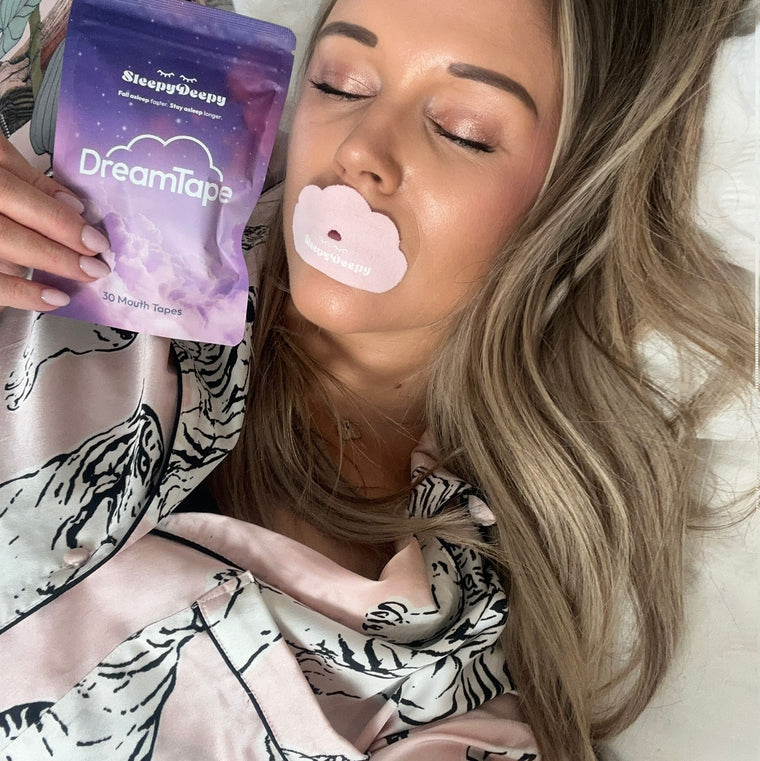
If exploring mouth taping: It can help some people, but should always be used thoughtfully and safely.
Even small improvements here can noticeably deepen sleep.
4) Improve Comfort (So Your Body Stops Interrupting Sleep)
Sometimes you’re not fully awake, you’re just never fully settled.
Micro-disruptions matter. Pressure, tension, heat, or poor alignment can quietly pull you out of deeper sleep cycles.
What helps:
- proper support for your sleep position
- reducing pressure points
- keeping your environment slightly cool
For side sleepers: A knee pillow can significantly reduce hip and lower back strain.
The Smarter Approach: Stack Small Wins
This is the shift most people need to make: sleep isn’t fixed by one thing.
It improves when you remove multiple small blockers at once, because most “bad sleepers” aren’t dealing with one single issue. They’re dealing with a stack of friction: a bright room, a noisy street, a busy mind, uncomfortable positioning, nasal congestion, and a bedtime routine that changes night to night.
None of those problems feels huge on its own. But together, they keep your nervous system alert.
That’s why stacking works.
When you make a few small improvements at the same time, you create momentum. Each change lowers resistance:
- less stimulation
- a calmer state
- smoother breathing
- better comfort
- a predictable routine
On their own, they’re subtle. Together, they’re powerful.
Because your brain stops asking questions: Is that light going to wake me? What was that noise? Why can’t I settle? Did I forget something?

If You’re Tired of Trial-and-Error
Most people don’t struggle because they’re doing nothing.
They struggle because they’re trying too many disconnected things. That’s where a system helps. Instead of guessing, you start with what works together.
SleepyDeepy bundles are designed around exactly that:
- solving specific blockers
- combining complementary tools
- making your routine easier to stick to
For example: The Deep Sleep Starter Kit combines light control, breathing support, and a wind-down cue, three of the highest-impact levers for most people.
What Better Sleep Actually Feels Like
Better sleep doesn’t feel forced. It feels like your body finally stops resisting it. And when it starts working, it’s usually not dramatic. It’s subtle, almost easy to miss at first.
You fall asleep a little faster. You wake up one fewer time. You stop bracing for bedtime like it’s a test you might fail. Your mornings feel less heavy. Your brain feels less sharp-edged. You’re not “perfect”, you’re simply more stable.
That’s what most people are really looking for.
Not a knock-you-out solution. Not something you have to rely on forever. Just a night that feels calm, predictable, and repeatable.
If melatonin hasn’t been the answer for you, that doesn’t mean you’re broken or “bad at sleeping”. It usually means the real issue isn’t a lack of sleepiness, it’s too much friction at bedtime: too much stimulation, too much alertness, too much inconsistency.
When you remove that friction and stack a few small wins, your brain stops treating the night like a problem to solve.
It starts letting go. That’s the difference between chasing sleep… and creating the conditions for it.
And once you experience that shift, even for a few nights, sleep starts to feel like something your body knows how to do again.