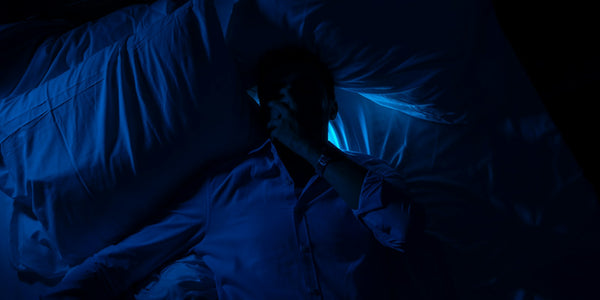
Lying awake when you want to be asleep is one of the more frustrating experiences a human being can have. The harder you try to sleep, the more awake you feel. The clock says 11:42pm, then 12:08am, then 12:31am. You're exhausted. Nothing is happening.
There is a lot of advice out there about falling asleep faster. Some of it is well-evidenced, some of it is mildly useful but overhyped, and some of it is genuinely counterproductive. This article covers what the science actually supports - without the wellness fluff.
What sleep onset actually is
The short answer. Sleep isn't something you do. It's something that happens to you when two conditions are met: your sleep pressure is high enough, and your nervous system is calm enough to let go.
Sleep pressure is driven by adenosine - a chemical that builds up in the brain the longer you've been awake. The more adenosine, the sleepier you feel. Caffeine works by blocking adenosine receptors, which is why it works and why it eventually stops working when it wears off.
The second condition - nervous system calm - is where most people run into trouble. You can have enormous sleep pressure and still lie awake for an hour if your brain is in a state of alert. Anxiety, worry, frustration about not sleeping, checking your phone, a stressful conversation before bed - all of these activate the sympathetic nervous system and delay sleep onset, regardless of how tired you are.
So the goal isn't to try harder. It's to stop doing things that keep your nervous system switched on, and start doing things that reliably switch it off.
What actually works
A warm bath or shower about an hour before bed
This is one of the most consistently supported findings in sleep research. Core body temperature needs to drop by about one degree for sleep to begin. A warm bath or shower raises your skin temperature, which triggers the body to actively dissipate heat - and this cooling process accelerates the drop in core temperature that sleep requires.
The timing matters. Too close to bed (within 30 minutes) and the cooling effect hasn't had time to kick in. About 60-90 minutes before sleep is the sweet spot. Even a warm foot bath works via the same mechanism.
A consistent wake time
Most sleep advice focuses on bedtime. The research says the more powerful anchor is wake time. Going to bed at different times but getting up at exactly the same time every day builds a reliable circadian rhythm that makes falling asleep faster a natural consequence.
This is uncomfortable because it means getting up at the same time on weekends. But the evidence for it is strong. Irregular wake times - even by an hour or two - fragment the circadian signal and make sleep onset later and more effortful.
Getting out of bed if you're still awake after 20 minutes
This is stimulus control therapy, and it has the strongest evidence base of anything in sleep research. The principle: your bed should be strongly associated with sleep and nothing else. Every minute you spend awake in bed - scrolling, worrying, watching television, staring at the ceiling - weakens that association.
If you've been awake for more than 20 minutes, get up, go to another room, do something quiet and non-stimulating in low light (reading a physical book is ideal), and return to bed only when you feel sleepy. It feels counterintuitive. It works. The same principle applies if you wake in the early hours - see why you wake at 3am and what to do about it.
Writing down your worries before bed
Cognitive arousal - the racing mind - is the single most common cause of delayed sleep onset in otherwise healthy people. One technique with reasonable evidence behind it is a pre-sleep "worry dump": 10-15 minutes of writing down everything on your mind, including a brief note about what you plan to do about each thing.
This isn't journalling in the therapeutic sense. It's more like emptying a cache. Unresolved concerns stay active in working memory because the brain is trying not to forget them. Writing them down transfers that responsibility to paper, allowing the brain to let go.
A related technique: if you tend to think of things you've forgotten to do while lying in bed, keep a notepad on the bedside table. Write it down immediately, turn the light off, move on.
Breathing techniques
Slow, controlled breathing activates the parasympathetic nervous system - the "rest and digest" branch that counteracts the alerting response. The best-evidenced technique is simple: inhale for four counts, hold briefly, exhale for six to eight counts. The extended exhale is the active part. A long exhale triggers the vagal response that slows the heart rate.
The 4-7-8 method (inhale 4, hold 7, exhale 8) is a popular version. The specific numbers matter less than the principle: exhale longer than you inhale, breathe slowly, breathe through your nose. Nasal breathing during sleep also significantly reduces snoring - if that's a factor, see our guide on how to stop snoring.
Lavender and scent association
Aromatherapy is often dismissed as pseudoscience. For most applications, that's fair. For lavender and sleep specifically, the evidence is more interesting than you'd expect. Several small but well-designed studies have found that inhaling lavender reduces cortisol, lowers heart rate, and shortens sleep onset time.
There are two mechanisms at play. First, linalool and linalyl acetate (the active compounds in lavender) have mild inhibitory effects on the nervous system. Second, and arguably more powerfully, scent is processed directly by the limbic system - the brain's emotional and memory centre. A consistent pre-sleep scent becomes a conditioned sleep trigger over time. Your brain starts to associate the smell with sleep, and the smell becomes a signal that sleep is coming.

DreamMist Lavender Pillow Spray - use as part of a consistent pre-sleep routine to build the scent association over time.
Using a lavender pillow spray as part of a consistent wind-down routine works better than using it randomly. The key is repetition: same scent, same time, every night. After a few weeks, the smell alone starts to trigger drowsiness.
Acupressure
Acupressure has a longer history than it has evidence - but the evidence for relaxation effects is more substantial than the broader claims sometimes made for it. The current understanding is that applying sustained pressure to certain points stimulates the release of serotonin and endorphins, reduces cortisol, and activates the parasympathetic nervous system.
For sleep specifically, lying on an acupressure mat for 20-30 minutes before bed - not in bed, but as a pre-sleep wind-down ritual - has been studied for its effects on sleep onset and sleep quality. The initial discomfort gives way to a warm, heavy sensation as blood flow increases and the nervous system settles. Many people find they're genuinely drowsy by the time they get off.

DreamMat Acupressure Mat - 20-30 minutes before bed as a wind-down tool, not as a mattress topper.
The important caveat: acupressure mats are not magic. They work as part of a consistent wind-down routine, alongside the other techniques in this article, not as a standalone fix. The mechanism is physical relaxation and nervous system downregulation - which is well-understood - not energy fields or anything less verifiable.
What doesn't work (or works less than advertised)
Counting sheep
A much-cited Oxford study found that people who counted sheep actually took longer to fall asleep than those who imagined a calm, peaceful scene. The problem with counting sheep is that it's just boring enough to be something your brain is doing, but not engaging enough to crowd out anxious thought. Imagining somewhere peaceful you've actually been - in detail - is more effective.
Melatonin (for most people)
Melatonin is widely used and widely misunderstood. It is not a sleeping pill. It is a circadian signal - it tells your body that darkness has arrived and sleep time is approaching. It works well for jet lag (shifting your clock to a new time zone), and there's decent evidence for its use in delayed sleep phase disorder (chronic night owls who can't fall asleep until 2am or later).
For the average person who struggles to fall asleep because of cognitive arousal or poor sleep hygiene, melatonin does very little. It doesn't reduce the time it takes to fall asleep by a meaningful amount in most studies. Sort the behavioural factors first.
Alcohol
Alcohol makes you drowsy, and it does reduce the time it takes to fall asleep initially. But it destroys sleep quality in the second half of the night - suppressing REM sleep, increasing waking, and leaving you unrefreshed regardless of how many hours you were in bed. It's a sedative, not a sleep aid. There's an important difference.
"Just relax"
The instruction to relax is one of the least useful things you can tell someone who can't sleep. Trying to relax is paradoxically activating - the effort of attempting to force a state creates the opposite of that state. The techniques in this article work because they give the nervous system something specific to do (a bath, a breathing pattern, a scent, physical pressure) rather than demanding it perform on command.
Building a routine
None of these techniques works optimally in isolation or used occasionally. The research is consistent: a predictable, calming pre-sleep routine is the single most reliable predictor of fast sleep onset. Your brain is a pattern-recognition machine. When the same sequence of events happens every night at the same time, it begins to anticipate sleep at the end of that sequence.
A simple version: shower at 10pm, 20 minutes on the acupressure mat, spray the pillow, read for 20 minutes in dim light, lights out at 11pm. Same order, same time. Within a few weeks, the routine itself becomes the sleep signal.
The other thing the research is consistent on: screens off 30-60 minutes before bed. Not because of blue light (the evidence for blue light specifically is weaker than claimed) but because any engaging screen content - news, social media, video - keeps your nervous system switched on. It's the stimulation, not the wavelength.
Sleep well. Sleep properly. SleepyDeepy.