
Nasal strips are one of the least glamorous sleep products you can buy. There is no app, no subscription, no thirty-step protocol. You stick one across your nose before bed and breathe better. That is it.
And yet they are one of the most consistently effective tools for people who snore, mouth-breathe at night, or wake up with a dry mouth and a foggy head. If your nose is even slightly restricted while you sleep - and for most people it is - a nasal strip makes a measurable difference to airflow, sleep quality, and how you feel in the morning.
This guide covers how they work, what to look for when buying in the UK, and which ones we recommend.
What nasal strips actually do
The short answer. A nasal strip is a small, spring-like adhesive band that sits across the bridge of your nose. When applied, it gently pulls the sides of the nose outward, widening the nasal passages. More open passages mean less resistance to airflow, which means you breathe more easily through your nose rather than defaulting to your mouth.
That matters for sleep because nasal breathing is significantly better than mouth breathing in every measurable way. Nasal breathing filters and humidifies incoming air, produces nitric oxide (which widens blood vessels and improves oxygen delivery), and helps maintain the slow, steady breathing pattern that supports deep sleep. Mouth breathing does none of these things - and is directly associated with snoring, dry mouth, disturbed sleep, and waking tired.
Nasal strips do not fix a deviated septum or treat conditions like sleep apnea. But for anyone whose nose is partially congested, slightly narrow, or prone to collapsing slightly inward during sleep, they remove a real obstacle. Many people who have tried everything for snoring find that nasal strips, used alongside mouth tape, finally gives them a quiet night.
Who benefits most
Nasal strips are worth trying if you:
- Snore, or have been told you snore
- Wake up with a dry mouth or sore throat
- Feel like you cannot breathe properly through your nose at night
- Get congested easily, especially in cold weather or allergy season
- Use mouth tape but find your nose is too restricted to breathe comfortably through it
- Feel groggy or unrefreshed in the morning despite a full night in bed
If several of these sound familiar, a nasal strip is a cheap thing to try tonight.
They also work well for exercise and high-intensity activity, but for the purposes of this guide we are focused on sleep.
What to look for when buying nasal strips in the UK
Size and fit
Nasal strips come in standard and large sizes. Most adults fit standard, but if you have a wider nose bridge or find the strip does not stay flat, size up. A poorly fitting strip loses most of its effectiveness because it cannot exert consistent outward tension.
Adhesive strength
The adhesive needs to hold all night on skin that may be slightly oily or sweaty. Cheap strips with weak adhesive peel off after a couple of hours and do nothing. Good strips stay put through a full night without leaving irritation or residue. If you have sensitive skin, look for strips designed for sensitive skin specifically.
Spring strength
The lifting effect comes from a small spring band inside the strip. The stiffer the spring, the more it opens the nasal passage. Some strips are gentler for first-time users; others are firmer for people who need more support. Most people find a medium tension works best for sleep.
Value
Nasal strips are a nightly product. At £0.20 to £0.50 per strip, the cost adds up. Look for packs that bring the per-strip cost down while maintaining quality - a strip that falls off at midnight is worse than no strip at all.
Our recommendation: DreamFlow Nasal Strips

DreamFlow Nasal Strips - £9.99 for 30 strips (33p per strip)
DreamFlow is SleepyDeepy's own nasal strip, designed specifically for sleep rather than sport. Each pack contains 30 strips in your choice of black or pink - the black version in particular is one of very few nasal strips on the UK market that looks considered rather than clinical, which matters if you share a bed.
The adhesive holds well on clean, dry skin throughout the night. The spring tension is medium-firm - enough to make a clear difference to airflow without feeling uncomfortable or leaving marks. Most users notice an immediate difference in how freely they can breathe through their nose within a few minutes of applying.

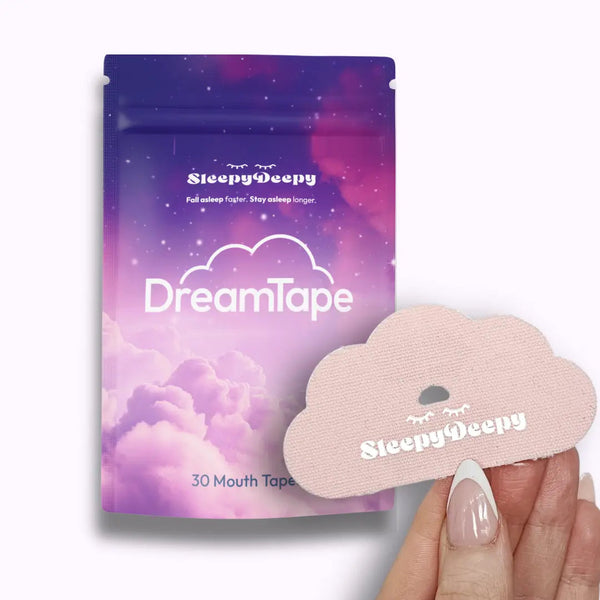
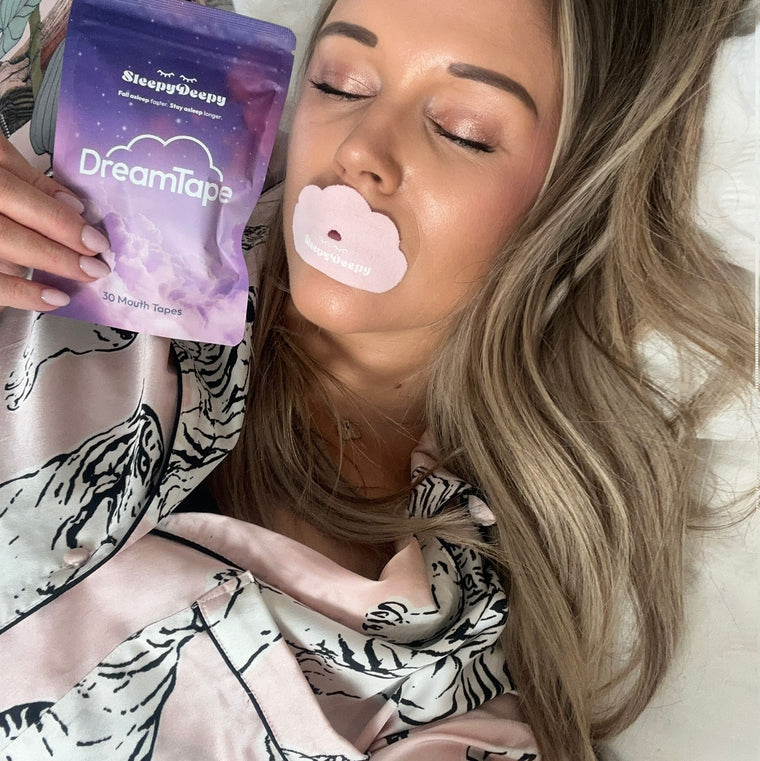
DreamFlow works well on its own, and works especially well combined with DreamTape mouth tape. The combination - nose open, mouth closed - is what sleep researchers call nasal-only breathing, and it is consistently associated with better sleep quality, less snoring, and waking more refreshed. If you have tried mouth tape and found it uncomfortable because your nose feels too restricted, DreamFlow is what was missing.
Shop DreamFlow Nasal Strips - Black | Pink
How to use nasal strips properly
Getting the best results from a nasal strip takes about thirty seconds of preparation:
- Clean and dry your nose first. Oil or moisturiser on the skin will prevent the adhesive from bonding. Wash your face, pat the nose area dry, and apply the strip before any night creams or oils.
- Position it correctly. The strip goes across the widest part of the nose, just below the bony bridge. The centre of the strip should sit on the tip of the nose bridge, with the ends curving down over the fleshy sides.
- Press firmly for ten seconds. Hold the strip flat against the skin and press along its length to activate the adhesive. Do not just lay it on top - press it down.
- Remove gently in the morning. Wet the strip first if needed. Pulling it off dry on sensitive skin can cause minor irritation over time.
DreamFlow vs Breathe Right
Breathe Right is the most widely recognised nasal strip brand in the UK, stocked in most pharmacies. They work, and they are a reasonable entry point if you want to test whether nasal strips are for you. But they have a few consistent drawbacks that regular users notice quickly.
The strips themselves are notably thin and the spring band feels flimsy compared to more recent products. On a drier or slightly oily skin surface, the adhesive can lose grip during the night, particularly on the second half of a long sleep. The beige colour and clinical strip design are also a consideration if you share a bed - they are not exactly subtle.
DreamFlow uses a firmer spring band for more consistent lifting force throughout the night, and the adhesive holds better on skin that has warmed up during sleep. Available in black and pink rather than the standard pharmacist beige, they are also less conspicuous. At 33p per strip versus a comparable per-strip cost for Breathe Right, the pricing is broadly similar - so the choice comes down to performance and whether you are happy with a strip that may not stay put until morning.
If you have already tried Breathe Right and found they work but do not hold well or do not open your nose enough, DreamFlow is the logical next step.
Nasal strips vs nasal dilators
Internal nasal dilators (small clips or cones that sit inside the nostrils) are sometimes marketed as an alternative. They work by a similar mechanism - widening the nasal passage - but many people find them uncomfortable to sleep in, and they require regular cleaning. External nasal strips are generally easier to tolerate for all-night use and more practical as a daily product.
Common questions
Do nasal strips stop snoring?
They reduce snoring caused by nasal restriction - where the noise comes from vibrating tissue in a partially blocked nasal passage. If your snoring originates in the throat or soft palate, nasal strips alone may not be enough, and mouth tape or other approaches may be needed alongside them.
Are nasal strips safe to use every night?
Yes. There are no known risks from nightly use. The adhesive in quality strips is skin-safe. Some people with very sensitive skin find their nose gets slightly red over time - if this happens, give the skin a night off every few days.
Can I use nasal strips if I have sleep apnea?
Nasal strips can help with breathing comfort and snoring associated with nasal congestion, but they are not a treatment for obstructive sleep apnea. If you suspect you have sleep apnea, speak to your GP. Many people with mild apnea find nasal strips help as part of a broader approach, but they should not replace medical advice or prescribed treatment.
Do they work if I am congested?
Somewhat. A nasal strip widens the external passage but cannot clear mucus from deep in the nasal cavity. For cold or allergy-related congestion, a saline rinse before bed combined with a nasal strip is a better combination than a strip alone.
The bottom line
If you breathe through your mouth at night, snore, or wake up less refreshed than you should, your nose is probably part of the problem. Nasal strips are a cheap, immediate, zero-side-effect way to address that. At 33p a night for DreamFlow, the cost of a trial is negligible compared to the potential upside.
They work best as part of a broader approach to nasal breathing. Used alongside DreamTape mouth tape, many people find they finally sleep through the night without snoring, dry mouth, or unexplained tiredness.
Sleep well. Sleep properly. SleepyDeepy.