Most sleep masks are a joke. Thin fabric, gaps along the nose, slips off within the hour. You wake up with it around your neck wondering why you bothered.
But a genuinely good sleep mask is one of the highest-ROI sleep purchases you can make. Light is one of the most powerful suppressors of melatonin. Even ambient light through closed eyelids - streetlamps, phone charging LEDs, early morning sun - signals your brain that it is not yet time to sleep. Block that light properly, and most people notice a real difference in how quickly they fall asleep and how long they stay that way.
This guide covers what actually matters when buying a sleep mask, what to avoid, and which one we think is worth your money.
What to look for in a sleep mask
Total blackout
This is the only specification that actually matters. A mask that lets in 20% of ambient light is doing 20% of the job. You want total blackout - zero light reaching the eyes when the mask is on correctly.
The weak point on most masks is the nose gap. Flat masks sit against the face but create channels either side of the nose bridge. Look for a contoured or 3D design that cups around the eyes rather than pressing flat against them - this closes the nose gap and protects the eyes from pressure while they move during REM sleep.
Fit and adjustability
A mask that slips off during the night is useless. The strap needs to hold the mask in place across all sleep positions - including on your side, where gravity works against you. Adjustable straps matter, and the strap material matters too: elastic that digs in or catches in your hair will wake you up.
Material against the skin
Whatever presses against your face for eight hours needs to be soft and breathable. Synthetic masks trap heat, leave marks on the skin, and feel uncomfortable against sensitive skin. Natural fibres - bamboo silk in particular - are noticeably cooler, gentler, and do not catch on lashes or irritate the eye area.
Weight
Heavy masks shift during the night. Lighter is better, as long as the design is still rigid enough to maintain the blackout seal.
What to avoid
Flat fabric masks. They press on the eyelids, allow light in at the nose, and slip. Fine for a flight. Not for a full night's sleep. If you are flying soon, our guide on how to actually sleep on a plane covers the rest of the kit and the timing.
Masks marketed primarily for spa use. Spa masks are designed for relaxation during facials, not eight hours of uninterrupted sleep. Different product.
Very cheap masks. Below about £8, you are getting thin fabric, cheap elastic, and no meaningful blackout. The upgrade cost from a bad mask to a good one is small. It is worth paying it.
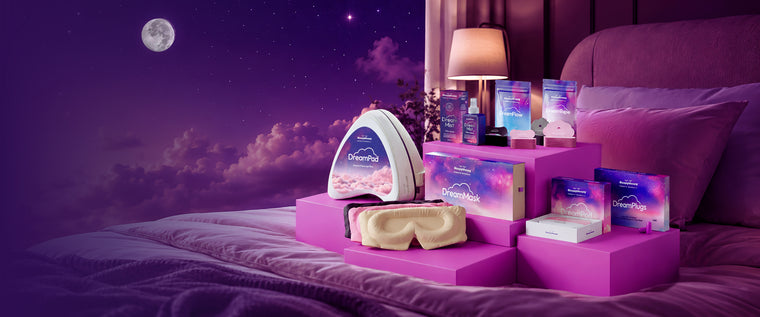
Our pick: DreamMask

The DreamMask is built around the three things that actually matter: a proper blackout seal, a comfortable fit, and material that feels good against skin all night.
The 3D memory foam shell cups around the eyes rather than pressing flat against them. This does two things: it closes the nose gap that lets light in on flat masks, and it keeps the mask off the eyelids entirely - so your eyes can move freely during REM sleep without any pressure sensation.

The outer layer is 100% bamboo silk - cooler than cotton or synthetics, softer against the skin, and does not pull on lashes or irritate the delicate eye area. The adjustable strap holds the mask in place without digging in across all sleep positions.
Available in seven colours: Black, Champagne, Grey, Lavender, Pink, Teal, and White. All identical in construction - it is a preference choice.
Price: £24.99
Frequently asked questions
Do sleep masks actually help you sleep better?
Yes, if light is a factor. Light suppresses melatonin even through closed eyelids. Blocking it properly - not partially - can make a meaningful difference to how quickly you fall asleep and how early you wake. If your room is already pitch black, the benefit is smaller. But most bedrooms are not actually dark: charging lights, streetlamps, and early morning sun all contribute.
Will a sleep mask help with early morning waking?
Often yes. Early morning light is one of the main triggers for waking before you want to - it tells the brain the day has started. A good blackout mask removes that signal. Many people who reliably wake at 5am find they sleep through to 7am with a mask on.
Are sleep masks safe to use every night?
Yes. No downsides to sleeping with a mask long-term, provided the material is skin-safe and the mask is not putting pressure on the eyes. The 3D contoured design of the DreamMask means the shell sits around the eyes, not on them.
Can I use a sleep mask if I wear eyelash extensions?
With a 3D contoured mask, yes - the mask cups around the eye area rather than pressing against the lashes. Flat fabric masks are not suitable for lash extensions.
What is the difference between a sleep mask and an eye mask?
Same thing, different name. What matters is the construction: contoured versus flat, total blackout versus partial, natural versus synthetic material.
The bottom line
A good sleep mask needs to do three things: block light completely, fit securely, and feel comfortable all night. Most masks fail on at least one. The DreamMask gets all three right, at £24.99.
If light is part of why you are not sleeping well - or if you simply want to stop waking up too early - this is one of the simplest and most cost-effective changes you can make.
Sleep well. Sleep properly. SleepyDeepy.