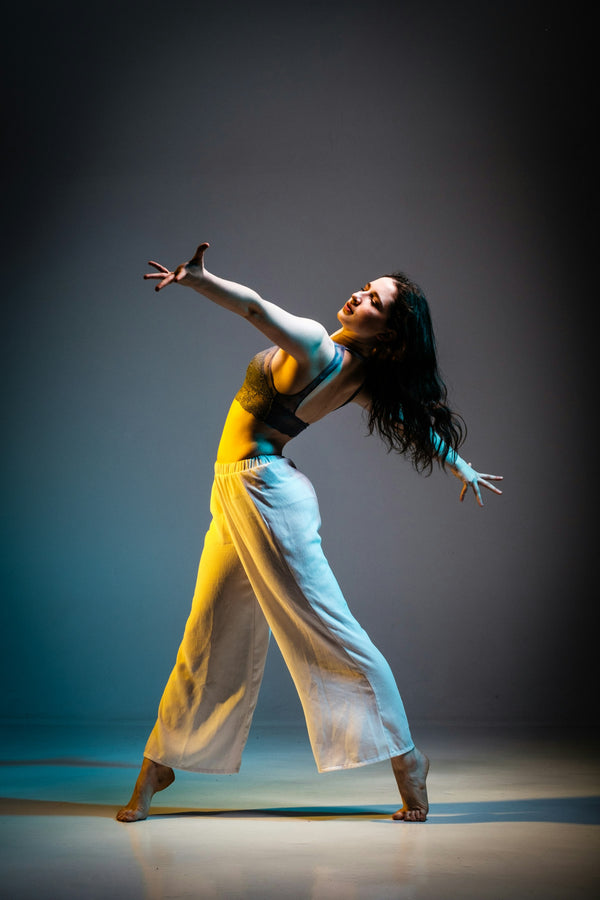
You go to a slow evening class - hip openers, long forward folds, the long-held shapes that always leave you feeling like a puddle by the end - and that night you sleep like you have not slept in months. So you book in again the following week, only this time the studio has swapped the timetable, you end up in a stronger flow, and by 11pm you are wide awake with your mind racing and your heart still buzzing.
Yoga is one of the most reliable ways there is to sleep better. It is also, depending on what you do and when, one of the easier ways to leave yourself wired before bed. Here is how it actually works, and how to use your practice to genuinely sleep deeper rather than just hope for the best.

The two-way street
It helps to think of yoga as two things at once. It is a stimulus - you move, breathe, hold shapes, give your body new information - and it is a tool for downshifting your nervous system, sometimes more powerfully than anything else on offer. Which of those two effects ends up dominating depends entirely on the kind of practice and when you do it.
And it works in the other direction too. Good sleep makes the next practice easier - balance is steadier, breath comes more naturally, the mind settles faster - while poor sleep makes every pose feel like more work. Like running and lifting before it, yoga and sleep run in a loop - just at a slower tempo and through different mechanics.
How yoga changes your sleep
This is the half most people come to yoga for, and the half it does most powerfully. A regular gentle practice is one of the best-evidenced ways to fall asleep faster and sleep more deeply. Here is what is actually happening.
It shifts you into rest and digest. Slow movement, long held shapes and gentle stretching activate the parasympathetic branch of your nervous system - the one that runs digestion, repair and sleep. It is the polar opposite of fight or flight, and it is the state your body has to be in to drop off easily.
It lowers cortisol. A consistent gentle practice has been shown to reduce the main stress hormone, which is the same hormone that, when it stays high, keeps you alert at night and pulls you out of sleep in the early hours. Less of it in your system means less to fight against when you want to be asleep.
Slow breathing changes the whole body. Lengthening the exhale slows the heart, drops blood pressure and tells the brain you are safe. Much of what yoga does for sleep, breath does directly. Even a few minutes of slower breathing before bed can shift you out of overdrive.
It quiets the racing mind. Yoga keeps attention on the body, the breath, the shape you are holding. That leaves less attention for the loops of thought that keep you awake or wake you at 3am. It is not magic - it is just a useful way to spend the half hour before bed.
It becomes a sleep cue. If you finish each practice the same way - a few minutes of stillness, the same scent in the air, the same lighting - your brain starts to recognise the pattern. Over weeks the routine itself starts pulling you toward sleep.
But the wrong practice at the wrong time wakes you up. Hot, fast, strong flows raise core temperature, heart rate and cortisol, which is great for the morning and not at all what you want at 9pm. If your evening class is leaving you wired rather than melted, the class is doing what it is meant to - just at the wrong end of the day.
How sleep deepens your practice
The quieter half. Sleep does not transform your yoga the way it transforms lifting or running, but the difference between a well-slept and a tired practice is real and noticeable once you start paying attention to it.
Balance and proprioception need rest. Standing balances, single-leg work, tree pose, warrior three - all rely on tiny postural adjustments that get sluggish when you are tired. A poor night and the floor seems to tilt slightly under you.
Flexibility is partly a nervous-system thing. Tight hamstrings in the morning are not always about your muscles. A tired body guards more, holding on rather than letting go. Rested, the same shapes open up surprisingly easily.
The breath gets harder to steady. Pranayama and even simple ujjayi rely on focus and a calm system. After a short night the breath comes shallow, the count slips, and the practice feels effortful rather than restorative.
The mind wanders. The whole point of a practice is to keep attention on what you are doing. Tired attention drifts within seconds, which leaves you going through poses without really being in them.
Motivation drops off. Skipping the mat after a bad night is one of the most common ways a practice quietly disappears. Sleep is what keeps consistency intact - and consistency is what makes yoga work.

When to take it more seriously
Yoga rarely creates serious sleep problems on its own, but a few patterns are worth being honest about:
- Persistent insomnia despite a calm practice. If you are doing gentle, regular yoga and still cannot sleep, the cause is probably elsewhere - worth a conversation with your GP rather than trying to yoga harder.
- Pain that is breaking your sleep. Niggles from yoga, particularly in the lower back, neck or shoulders, should ease within a session or two. Persistent pain disturbing your sleep is a sign to see a physio rather than push through.
- Hot yoga late in the evening. Hot classes can leave core temperature elevated for hours, which sabotages the natural drop your body needs to fall asleep. Move them earlier in the day or swap them for a gentler evening practice.
- Practice that has become another thing to perfect. If yoga has tipped from soothing into another source of pressure, it is no longer doing what you came for - worth noticing and adjusting before it costs you sleep too.
If any of these sound familiar, it is worth a conversation with your GP.
What actually helps
Match the practice to the time of day
Vigorous styles - vinyasa, ashtanga, power, hot - are morning and midday practices. They energise. Restorative yoga, yin, gentle hatha and supine sequences are the evening choices. If you only have time for one practice and you want it to help you sleep, choose a slow one and do it closer to bed.
Try a short bedtime sequence
You do not need an hour of yoga to sleep better. Ten to fifteen minutes is enough to shift the nervous system. A simple sequence that works for most people: a few minutes in supported child's pose, a long-held supine twist on each side, legs up the wall for five minutes or so, and a final few minutes flat on your back with the eyes covered. That last part - quiet, still, with the lights low - is where most of the sleep benefit lands.
Use the breath as the actual sleep tool
Most of what makes yoga sleep-friendly is the breathing. A slow practice with long exhales does most of the work whether or not you ever touch your toes. Breathing through the nose rather than the mouth deepens the effect, and it carries straight through into the night. DreamFlow nasal strips gently open the nasal passage, which makes nose breathing easier both on the mat and in bed - so the slower breath you built up in your practice keeps going while you sleep.
Lie on the mat, then carry it into bed
After your last pose, you do not have to leap up. A few quiet minutes on the floor, in low light, signal to your body that the wind-down has begun. An acupressure mat is a useful tool here - lying back on it after practice helps release the tension long-held shapes can sometimes leave in the back and shoulders, while keeping you in the same restful mode you have just spent half an hour cultivating. A few minutes on a DreamMat at the end of a session is a natural bridge from the mat to the bed.
Make the practice a sleep ritual
Yoga works best for sleep when it becomes part of a consistent wind-down routine rather than an occasional one. Same time of evening, same lighting, same scent. DreamMist lavender pillow spray works well as the scent cue - a few mists at the end of your practice and again on the pillow ties the two together, so the calm you built on the mat carries straight into bed.
Use savasana as a doorway to sleep
Savasana is meant to be a complete rest, with the eyes covered and the lights low. The same kit you use to make savasana work properly is the kit you want for sleep. A weighted or silk-lined eye mask blocks the last of the light, encourages full relaxation around the eyes, and goes from the mat onto the bedside table - and back over your eyes when you turn out the light. A DreamMask blackout sleep mask is just as useful in savasana as it is for the rest of the night.
Treat poor sleep as a practice variable
On the days after a bad night, choose a gentler practice. Trying to power through a strong flow on four hours of sleep is how niggles start and how you end up dreading the mat. A slow, restorative session on tired days does more for you than a hard one - and helps you sleep better that night.
Frequently asked questions
Does yoga really help you sleep better?
Yes - it is one of the better evidence-supported practices for both falling asleep faster and improving sleep quality, particularly for people who struggle with stress, racing thoughts or general sleep dissatisfaction. The effect is most reliable with regular practice rather than the occasional class.
Which type of yoga is best for sleep?
Restorative yoga and yin yoga are the most clearly sleep-promoting styles - long, well-supported holds, no heat, no effort. Slow hatha and gentle vinyasa also work well in the evening. Save the vigorous and hot styles for the morning or middle of the day.
Is it bad to do yoga right before bed?
It depends on the practice. A slow ten to twenty minute sequence right before bed is one of the most reliable ways there is to fall asleep faster. A hard or hot class right before bed is one of the most reliable ways to lie awake.
How long should a bedtime yoga routine be?
Ten to fifteen minutes is plenty. The benefit is in the wind-down, not the volume. If you have more time and enjoy it, longer is fine - but a short, consistent routine you actually do beats a long one you skip.
What about yoga nidra - is that the same thing?
Yoga nidra is a separate, guided practice that takes you to the edge of sleep while you stay lying down. It is closer to a structured deep relaxation than to a yoga class. It can be genuinely powerful for sleep and worth trying - either as your wind-down or as a way back into sleep when you wake in the night.
Does my menstrual cycle change how I should practise?
It can. Many people find a gentler, more restorative practice suits the days before and during a period - longer holds, more support, less heat. The luteal phase often comes with lighter sleep and a small rise in body temperature, so a slow evening practice tends to land better than a vigorous one. It is not a rule, just a useful pattern to notice in yourself.
The bottom line
Yoga is one of the simplest and most reliable ways to sleep better - but only if you match the practice to the time of day. Vigorous in the morning, gentle in the evening, and a short slow sequence as part of your wind-down whenever you can.
Lengthen the exhale, breathe through your nose, and let the practice quietly become a sleep cue. A few minutes of stillness on the mat at the end of your session, the same scent each night on the pillow, an eye mask for savasana that stays on once you get into bed - the small kit you use on the mat is the kit you use to sleep, and that is a quiet part of how a regular practice ends up deepening your nights.
Try DreamMat - acupressure mat to release tension after practice and bridge the mat to the bed.
Try DreamFlow - nasal strips that keep the slow nasal breathing of your practice going all night.
Try DreamMist - lavender pillow spray to anchor your wind-down with a consistent sleep cue.
Try DreamMask - blackout sleep mask that takes you from savasana into a fully dark night.
Breathe slow. Sleep deep. SleepyDeepy.