You have been looking forward to this trip for months. You arrive, fall into bed exhausted, and then snap wide awake at 3am, staring at an unfamiliar ceiling while the rest of the world sleeps. Or you spend the first three days of a week-long holiday in a fog, finally start to feel human, and then it is already time to fly home.
Travel is supposed to leave you refreshed. More often it shreds your sleep, and the trip you saved up for gets spent half-rested. The good news is that almost all of it is predictable, and most of it is preventable. Here is why travel wrecks your sleep, and exactly how to protect it - on the plane, in the hotel, and when you get home.

Why travel wrecks your sleep
Several things gang up on your sleep when you travel, often all at once. Knowing which ones are hitting you makes them far easier to fix.
Your body clock is in the wrong time zone. Your internal clock is still set to home, so it tells you to sleep when the destination says it is the middle of the afternoon. That mismatch is jet lag, and your body resets roughly a day per time zone crossed - which is why a big trip can leave you groggy for the best part of a week.
Light turns up where it should not. Bright cabins, hotel curtains that let in a strip of street light, early summer sunrises. Light is the single biggest cue your body uses to decide when to be awake, so the wrong light at the wrong time keeps you wired at night or drags you out of sleep at dawn.
Noise you cannot control. Engine hum, corridor doors, traffic, thin walls. Unfamiliar noise is far more disruptive than the sounds of home, because your brain has not yet learned which ones are safe to ignore.
Cabin air is extremely dry. The air on a plane is drier than most deserts. It dries out your nose and throat, pushes you toward breathing through your mouth, and leaves you waking parched and congested - none of which makes for restful sleep.
Your brain stays half on guard. On the first night in a new place, part of your brain tends to stay more alert, as if keeping watch. This first-night effect is why you so often sleep worst on your first night somewhere new and noticeably better by the second.
Your routine falls apart. Late dinners, airport coffee, the extra glass of wine, no wind-down, a different bedtime every night. The structure that normally signals sleep disappears the moment you leave home.
The room is too warm. You can rarely control a hotel thermostat, and a stuffy, overheated room makes it much harder to fall and stay asleep than a cool one.

When it is more than jet lag
Ordinary jet lag clears on its own within a few days to a couple of weeks. A few situations are worth a little more attention:
- Sleep that does not settle even once you are home and back in your normal routine after a week or two
- Leaning on alcohol or sleeping tablets to get to sleep away from home, particularly if it starts to become a habit
- Travel-related anxiety that is taking the enjoyment out of trips, or keeping you awake for nights before you have even left
If any of those sound familiar, it is worth a conversation with your GP or pharmacist rather than just powering through.
How to actually sleep well when you travel
Nudge your clock before you go
If you are crossing several time zones, you can soften the blow by shifting your schedule a little before you leave. Heading east, where you will need to sleep earlier than usual, try going to bed and waking 30 to 60 minutes earlier for a few days beforehand. Heading west, do the opposite. Even a partial shift means a smaller gap to close when you land.
Switch to the destination clock the moment you land
This is the single most effective thing you can do. From the minute you arrive, eat, sleep and wake on local time, even if your body protests. Get outside into daylight as early as you can in the destination morning, because morning light is the strongest signal for resetting your body clock. And resist the nap that turns into four hours - if you must nap, keep it short and early in the day.
Take control of the light
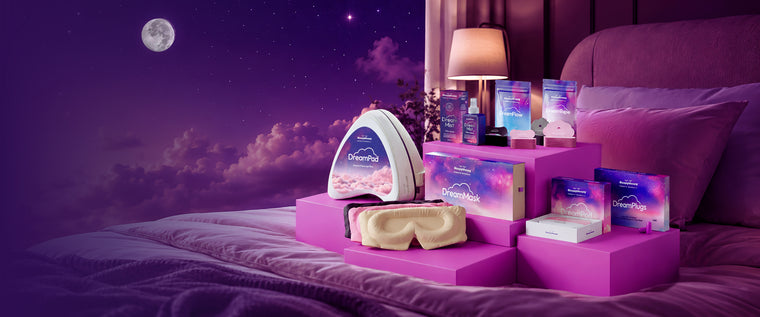
Hotel curtains are notoriously useless, and a sliver of street light or an early sunrise is enough to end your night prematurely. A proper blackout eye mask packs into a pocket and gives you darkness anywhere, whatever the room is like. A DreamMask blackout sleep mask blocks light completely on the plane and in the brightest hotel room, so your body gets the darkness it needs to stay asleep.
Block out the noise
Unfamiliar noise - engine drone, corridor doors, early traffic - is one of the most common reasons people wake in the small hours away from home. A good set of soft earplugs is the simplest fix there is. DreamPlugs soft ear plugs take the edge off plane noise and hotel disturbances while staying comfortable enough to sleep in, so a slammed door down the hall does not cost you an hour of sleep.
Beat the dry cabin air
The air on a plane is so dry that it dries out your nose and nudges you into breathing through your mouth, which fragments sleep and leaves you waking with a parched throat. Sip water steadily rather than alcohol, and help your nose stay clear so you can keep breathing through it. DreamFlow nasal strips gently open the nasal passage, which makes nose breathing easier on a dry flight and through the night in a stuffy, unfamiliar room.
Recreate your bedtime routine in a strange room
Part of why you sleep badly away from home is that none of your usual cues are there - so pack a few of them. Keep the last hour before bed as close to your home routine as you can, dim the lights, and bring one familiar sensory signal with you. A pillow spray is perfect for this: the same scent you use at home tells your brain it is time to sleep, even in a bed you have never slept in before. A few mists of DreamMist turns an anonymous hotel room into something your body recognises.
Be sensible with caffeine and the holiday wine
Both quietly sabotage travel sleep. Caffeine lingers for hours, so an afternoon coffee to push through jet lag can keep you up that night and deepen the problem. Alcohol feels like it helps you drop off, but it fragments your sleep badly a few hours later - the last thing you need when your body clock is already confused. Go easy on both for the first couple of nights while you adjust.
Frequently asked questions
How long does jet lag actually last?
A rough rule is about one day of adjustment per time zone crossed, though it varies a lot from person to person. Sticking to local time, getting plenty of morning daylight, and protecting your sleep with darkness and quiet all speed it up considerably.
Is flying east or west worse?
East is usually harder. Flying east means having to fall asleep earlier than your body wants to, which is more difficult than staying up later, as you do flying west. Plan for a rougher couple of days on eastward trips and be especially strict about chasing morning light.
Should I sleep on the plane?
It depends on the local time when you land. If you arrive in the morning, sleeping on the plane helps you get through the first day. If you land in the evening, try to stay awake so you are tired enough to sleep at local bedtime. Either way, an eye mask and earplugs make in-flight sleep far more achievable.
Why do I always sleep worst on the first night somewhere new?
This is the first-night effect: in an unfamiliar place, part of your brain stays more alert, almost standing guard, which lightens your sleep. It is completely normal and usually eases by the second night. Bringing familiar cues - your own scent, darkness, quiet - helps settle that watchful part of the brain faster.
Do melatonin or sleep supplements help with jet lag?
Melatonin is one of the few things with reasonable evidence for jet lag, since it can help nudge your body clock. It is worth knowing that in the UK melatonin is a prescription-only medicine rather than something you can buy over the counter, so speak to your GP or pharmacist before relying on it, particularly if you take other medication. It is also not a substitute for the basics of light, timing, and a dark, quiet room.
How do I get back to normal when I get home?
Treat the journey home like another trip. Get straight onto home time, chase morning daylight, avoid long late naps, and give yourself the same day-per-time-zone grace to readjust. Protecting those first few nights back with darkness and quiet helps you snap out of it faster.
The bottom line
Travel disrupts sleep in predictable ways - a confused body clock, too much light, unfamiliar noise, dry air, and a routine that has gone out of the window. None of it is bad luck, and almost all of it can be planned for.
Get onto local time straight away, chase morning daylight, and pack the few small things that give you control over your surroundings: darkness, quiet, easy breathing, and a familiar scent. Do that and you arrive ready to enjoy the trip, rather than spending the first half of it catching up on sleep.
Try DreamMask - blackout sleep mask for total darkness on the plane and in bright hotel rooms.
Try DreamPlugs - soft ear plugs to block out engine noise, corridors and early traffic.
Try DreamFlow - nasal strips to keep you breathing easily through dry cabin air.
Try DreamMist - lavender pillow spray to make any room feel like your own bed.
Travel well. Sleep well. SleepyDeepy.